Quick Highlights
In this guide, you’ll learn:
- Why your spine can gradually lose range of motion and start feeling stiff.
- How chiropractic adjustments can improve spinal mobility and restore movement in restricted joints.
- How better mobility relates to pain, stiffness, and everyday movement.
- Practical ways to improve your range of motion throughout the day.
- The difference between mobility and flexibility, and why both matter for how you move.
- How to recognize changes in your mobility before they start interfering with everyday activities.
Table of Contents
- Why Does Your Spine Lose Range of Motion Over Time?
- How Does a Chiropractic Adjustment Improve Spinal Mobility?
- Can Better Spinal Mobility Reduce Pain and Stiffness?
- How Can You Improve Your Range of Motion?
- Is Mobility the Same as Flexibility?
- What Do Patients Say About Chiropractic Care?
- What to Expect at The Joint Chiropractic
- Frequently Asked Questions About Spinal Mobility and Chiropractic Care
Think about the last time you turned to check your blind spot or reached for something on a high shelf and felt a catch in your back. Maybe you spend your days at a desk in Mesa, or you’re back from a long shift on your feet in San Tan Village. Either way, your spine isn’t moving the way it used to, and you’ve probably just gotten used to it. That stiffness isn’t something you have to accept as normal.
Why Does Your Spine Lose Range of Motion Over Time?
Range of motion doesn’t disappear overnight. Sitting for long stretches, repetitive movement, old injuries, and simple aging all chip away at how freely your joints move. When a joint doesn’t move through its full range regularly, the surrounding muscles and connective tissue tighten up around it. Over time, if the joint is restricted for months, degeneration (arthritis) can start settling in at that level. That restriction becomes your new normal, and you may not even notice how limited your movement has become until you try to twist, bend, or reach further than usual. Once arthritis sets in, there’s no reversing it, unfortunately.
How Does a Chiropractic Adjustment Improve Spinal Mobility?
A chiropractic adjustment applies a controlled, specific force to a joint that’s gotten stuck, moving it through a range it hasn’t reached on its own in a while. This helps restore the joint’s natural range of motion, loosen tight tissue around it, and reduce the inflammation that keeps it restricted.
According to the National Center for Complementary and Integrative Health (1) , spinal manipulation leads to improvements in both pain and function for people dealing with back pain. A licensed Doctor of Chiropractic assesses which joints are restricted and adjusts care to fit what your spine actually needs.
Can Better Spinal Mobility Reduce Pain and Stiffness?
Yes. Restricted joints force nearby muscles and joints to overcompensate, which can create pain in areas that weren’t the original problem. As mobility improves, that extra strain tends to ease off, too. Better circulation to the area also helps deliver oxygen and nutrients that support healing. A lot of patients notice that once a stiff joint starts moving more freely again, everyday tasks like getting out of the car or bending to tie their shoes feel less effortful.
How Can You Improve Your Range of Motion?
Restoring and maintaining joint mobility isn’t just about flexibility—it requires a balanced blend of daily movement, smart tissue lengthening, and muscular stability. When joints move freely through their full capacity, you reduce daily stiffness, lower injury risk, and perform better across all activities.
Move Throughout the Day
Sedentary habits cause connective tissues to shorten and stiffen. Break up prolonged sitting every 45–60 minutes with brief movement snacks—such as marching in place, hip openers, or shoulder rolls—to circulate synovial fluid and keep joints lubricated.
Stretch Tight Target Areas
Focus static stretching on chronically tight spots like the chest, hamstrings, and hip flexors. Hold gentle, pain-free stretches for 20–30 seconds after muscles are warm, breathing deeply to signal your nervous system to release deep-seated muscle tension.
Use Your Full Range of Motion
Your body adapts to how you move. Incorporate dynamic daily exercises that take your joints through their natural limits—such as deep bodyweight squats, arm circles, and cat-cow stretches—to prevent progressive loss of mobility over time.
Build Strength to Support Mobility
Flexibility without strength leads to unstable joints. Incorporate controlled resistance training through complete ranges of motion to reinforce joint integrity, teach your nervous system to trust new end ranges, and prevent surrounding muscles from overcompensating.
Pay Attention to Posture and Your Workstation
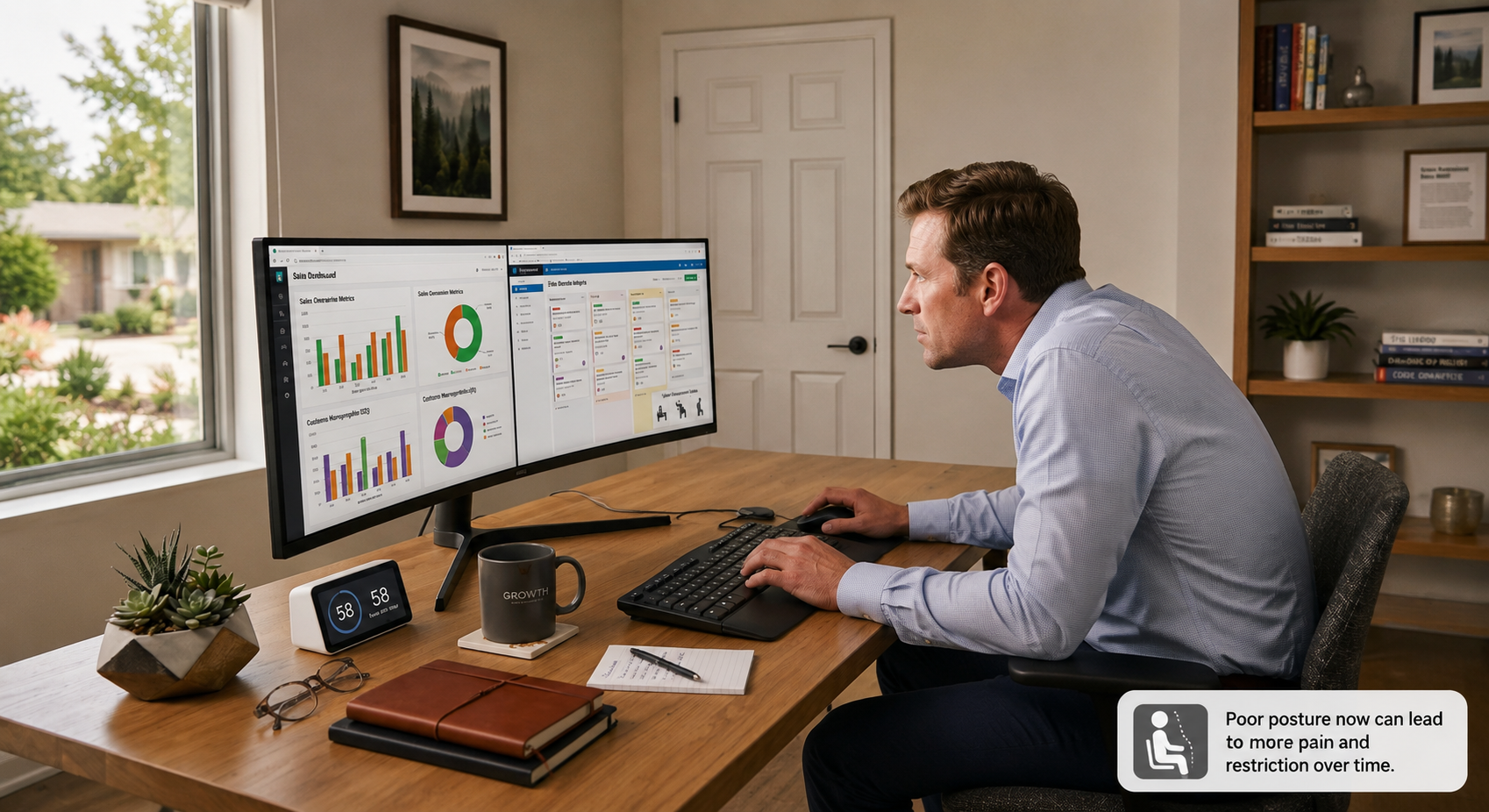
Sustained slumping restricts the thoracic spine and hips. Set your monitor at eye level, keep your elbows at 90 degrees, and avoid crossing your legs. Practicing neutral spinal alignment prevents the postural imbalances that quietly lock down overall mobility.
Is Mobility the Same as Flexibility?
While often used interchangeably, flexibility and mobility are not the same.
- Flexibility is passive—it refers to the ability of muscles and connective tissues to lengthen (like touching your toes with assistance or gravity).
- Mobility is active—it is the capacity of a joint to move freely and under control through its complete range of motion.
Because of this difference, someone can be extremely flexible yet still lack functional joint mobility. If the nervous system and surrounding stabilizer muscles cannot actively control a joint at its end range, movement remains restricted and vulnerable to injury.
This is why stretching alone rarely fixes chronic stiffness. True functional range of motion requires a synergy of joint mechanics, tissue flexibility, and muscular strength to create stable, fluid, and pain-free movement.
What Do Patients Say About Chiropractic Care?
Every patient’s experience is a little different. Here are a few comments from patients who visited our Power Ranch clinic for care.
“Dr Nick is phenomenal. Went from not being able to move my back to full mobility in 3 months. Grateful for his care and expertise.” – T. Drust
“Nick is the best chiropractor I’ve ever been to! He’s super professional and obviously good at his job. I had the worst back pain I’ve ever experienced and felt 100% better after a week. The environment is so welcoming as well. Everyone is so kind; I definitely recommend! ” – C. Wilson
“I was very hesitant to go to a chiropractor. After having ongoing back pain for I cannot even remember how long, I decided I had to do something and gave The Joint a shot. I went from constant discomfort and pain preventing me from doing daily chores to being pain-free in weeks. The relief came almost immediately, and within a few sessions,”- G. Twyman
See what patients near you say: Power Ranch, Mesa Gateway, Queen Creek, San Tan Village, San Tan Valley, and Hunt Highway.
What to Expect at The Joint Chiropractic

During your visit to our Southeast Valley clinics, a licensed Doctor of Chiropractic conducts an exam and consultation to identify joint restrictions and recommend personalized care to restore comfortable movement. New patients can take advantage of our $29 special, which includes the consultation, exam, and first adjustment, with additional plan details available on our pricing page.
Walk into your nearest Southeast Valley clinic today: Power Ranch, Mesa Gateway, San Tan Village, Queen Creek, San Tan Valley, and Hunt Highway.
If you’d like to know what a first visit involves from start to finish, take a look at our guide on what to expect at your first chiropractic visit.
Frequently Asked Questions About Spinal Mobility and Chiropractic Care
Can a chiropractor actually improve my range of motion?
Yes. Adjustments target joints that have gotten stuck and help restore the movement they’ve lost. The biggest benefit actually comes from the effects the adjustment has on your nervous system.
How long does it take to notice better mobility?
It varies by person. Some notice a difference after one visit, while others need a few visits before stiff areas start moving more freely. Typically, increased mobility is noticed even before a decrease in pain.
Is losing range of motion just a normal part of aging?
Some change is common with age, but the majority oflot of stiffness and restrictions come from sitting, posture, overuse injuries, and old injuries rather than age alone, which can almost always be improved.
Do I need an appointment at The Joint Chiropractic in the Southeast Valley?
No. All five locations offer walk-in care with no insurance needed.
Moving Freely Again Starts With One Visit
Stiffness has a way of creeping in so gradually that you stop noticing it until reaching, bending, or turning feels harder than it should. You don’t have to live with that as your new normal. Visit any of our five Southeast Valley clinics for a consultation, spinal exam, and adjustment. Walk-ins are always welcome, and your first visit is just $29. Find the location closest to you.
Disclaimer
This article is for general informational purposes only and does not provide medical or chiropractic diagnosis or treatment recommendations for any individual person. Always consult a qualified healthcare professional for an examination, diagnosis, and personalized treatment plan.
References
(1) National Center for Complementary and Integrative Health. (2024). Spinal manipulation: What you need to know. NCCIH. https://www.nccih.nih.gov/health/spinal-manipulation-what-you-need-to-know