

Quick Highlights
- What does sciatica feel like? Sciatica typically causes sharp, burning, tingling, or shooting pain that travels from the lower back into one leg.
- What causes sciatica? Herniated discs, spinal joint dysfunction, spinal stenosis, and piriformis syndrome are among the most common causes of sciatic nerve irritation.
- Can a chiropractor help sciatica? Chiropractic care may help reduce pressure on the sciatic nerve by restoring healthy movement in the lower back and addressing the underlying mechanical cause.
- When should you seek immediate medical care? Sciatica affecting both legs, loss of bladder or bowel control, or significant leg weakness requires immediate medical evaluation.
- Where can you find sciatica relief? The Joint Chiropractic offers walk-in care at five Southeast Valley clinics, including Gilbert, Queen Creek, Mesa Gateway, Power Ranch, and San Tan Valley.
This Sciatica Guide Covers
- What Does Sciatica Feel Like?
- What Causes Sciatica?
- How Chiropractic Care Helps Sciatica
- What the Research Says
- How to Relieve Sciatica at Home
- When Sciatica Needs Immediate Medical Attention
- What to Expect During Your First Chiropractic Visit
- Frequently Asked Questions About Sciatica
- Find Sciatica Relief in the Southeast Valley
What Sciatica Feels Like
People describe sciatica in a lot of different ways, and almost all of them are surprisingly accurate. While everyone’s experience with sciatica is a little different, these are some of the symptoms and descriptions we hear most often from patients:
- “It feels like an electric shock running down my leg. A sudden, breathtaking bolt of electricity that fires every time you move the wrong way.”
- “A burning pain that travels into the thigh. A deep, relentless heat that feels like someone is holding a lit match to the back of your leg.”
- “Tingling or numbness that never fully goes away. A constant pins-and-needles sensation in the foot, making the leg feel like it belongs to someone else.”
- “Sharp pain when sitting or standing up. A deep, heavy ache in the buttocks that makes finding a comfortable position in a chair nearly impossible.”

What all of these diverse symptoms have in common is pressure. Despite how different these sensations feel, they almost always point back to a single source: irritation or compression of the sciatic nerve.
What almost all sciatica has in common is that the pain travels. It does not stay in one spot the way a muscle strain does. It moves, usually from the lower back or buttocks down the back of the leg, sometimes all the way into the foot. And it tends to be worse when sitting, especially for long periods, because of the pressure that position puts on the discs in the lower spine.
Sciatica usually affects one side of the body. That one-sided quality, plus the way the pain travels, is often what helps people and their chiropractor recognize it for what it is
What Causes Sciatica and Why Some Cases Keep Coming Back
Sciatica is usually caused by something putting pressure on or irritating the sciatic nerve. Most often that is a herniated disc, but a tight piriformis muscle, spinal stenosis, or a misaligned vertebra in the lower back can cause it too.
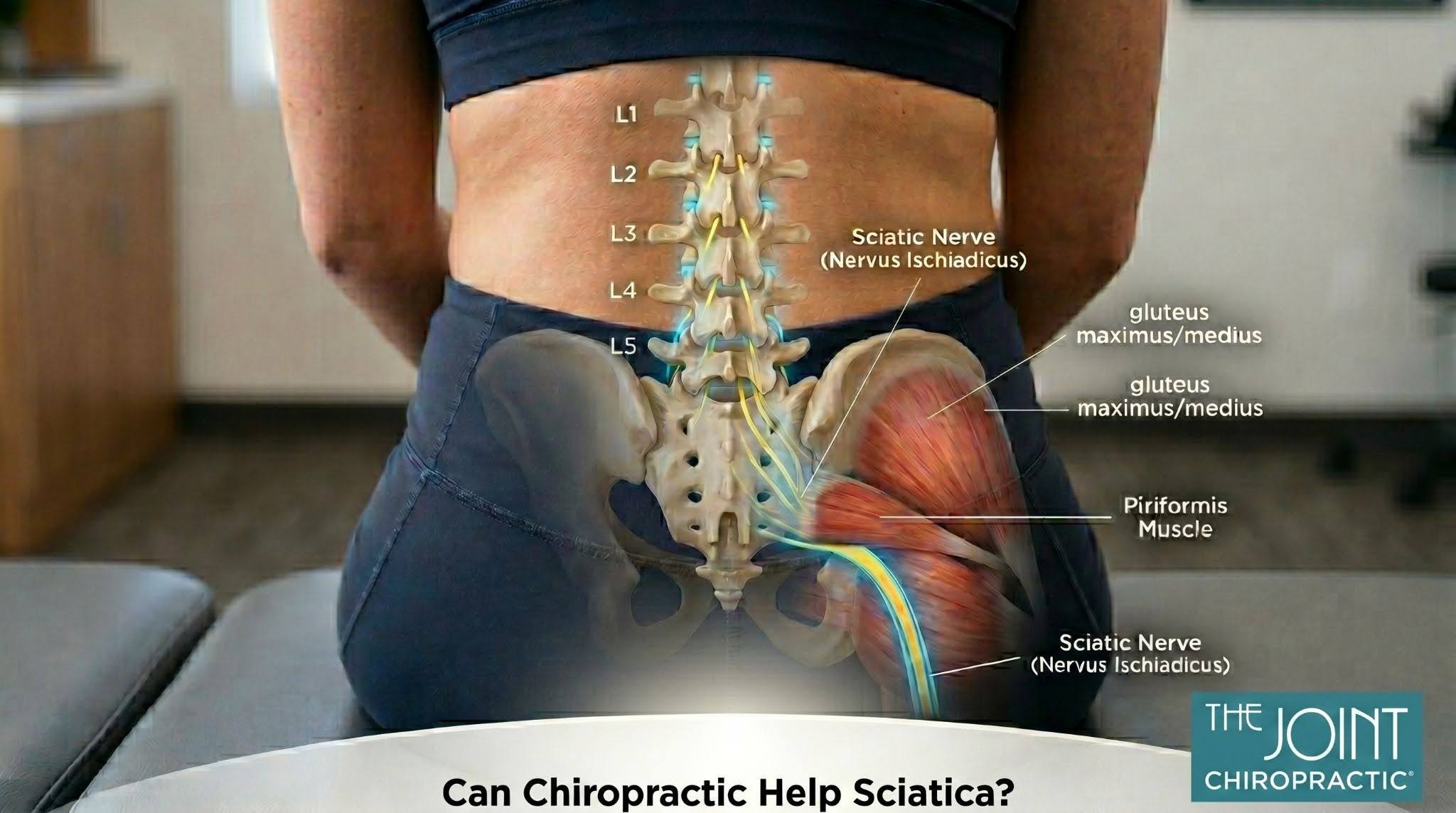
When these underlying conditions go unaddressed, it explains why sciatica keeps coming back. If the physical pressure on the nerve is never truly removed, the pain will simply flare up again the moment you sit too long, twist the wrong way, or lift something heavy. Treating the structural root cause is the only way to break this repetitive cycle.
Often, because the original cause, whether it is a restricted joint, a disc under too much pressure, or a chronically tight muscle, never fully got addressed.
Pain medication and rest may calm the symptoms, but if the pressure on the sciatic nerve hasn’t been addressed, the pain often comes back.
That is why a chiropractic exam looks for what is causing the irritation in the first place, whether it is a restricted joint, a herniated disc, muscle tension, or another issue affecting the nerve.
Pinpointing the exact source of the nerve compression is what changes your recovery. Identifying the structural issue lets a chiropractor create a targeted treatment plan to gently shift the pressure off the nerve, delivering lasting relief instead of a temporary fix.
How Chiropractic Care Addresses the Root of Sciatica
Chiropractic care for sciatica focuses on reducing the pressure that is irritating the sciatic nerve. The first step is figuring out what is causing that pressure so we can address it.
When the vertebrae in your lower back lose their proper alignment or stop moving well, they narrow the delicate spaces where the nerve exits the spine. Targeted adjustments gently restore that missing movement and open up the spinal space, taking the physical stress off the nerve so it can finally heal.
Lumbar Adjustments
Most sciatica that comes from a spinal cause starts in the lumbar region, the lowest section of the spine. Your chiropractor will use a controlled, targeted adjustment to address restricted joints in that area.
After a chiropractic adjustment, patients tell us they can walk more comfortably, sit through their commute, get back to hiking or pickleball, or make it through the day without the sharp pain shooting down their leg. Many people notice a lighter, more open feeling in their lower back immediately as the physical pressure lifts off the nerve. This restored mobility is what allows you to return to your normal daily routine without constantly worrying about your next painful step.
Piriformis Release
When the piriformis muscle is the one causing the problem, the approach shifts to soft tissue work targeting that area in addition to a spinal adjustment. Your chiropractor may use pressure and stretching techniques to release the tension in the piriformis before the nerve can calm down.
Postural and Movement Assessment
A big part of chiropractic care for sciatica is figuring out what habits or positions are making things worse. Long hours of sitting, always crossing the same leg, or carrying a heavy bag on one shoulder can all contribute to ongoing nerve irritation. Your chiropractor can help you see those patterns and make changes that take pressure off the nerve between visits.
What the Research Shows About Chiropractic and Sciatica
Chiropractic is one of the conservative treatments commonly recommended for sciatica before considering surgery. Here is what some of the research shows about its impact on recovery.
Researchers at the University Hospitals published a study in BMC Musculoskeletal Disorders looking at people who still suffered from sciatica at least a year after back surgery. Among those who received chiropractic spinal manipulation, the rate of needing a second spine surgery was significantly lower than in the group that received standard medical care alone.
For anyone who has already been through one back surgery, this means that targeted adjustments can be a powerful tool to help protect your spine and prevent another invasive procedure. It offers a proven, non-surgical path to help keep your spine stable and pain-free over the long term.
How to Relieve Sciatica at Home Between Chiropractic Visits
Chiropractic care helps address what is causing your sciatica, but the time between visits matters too. These simple habits can help reduce irritation on the sciatic nerve and support your recovery at home.
- Keep moving gently: Avoid prolonged bed rest, which can cause the muscles around your spine to stiffen up. Short, frequent walks on flat surfaces help maintain blood flow and reduce inflammation around the nerve.
- Use targeted ice or heat: Apply an ice pack wrapped in a cloth to your lower back for 15 to 20 minutes at a time to numb sharp, acute pain and lower swelling. Switch to moist heat if you are dealing with tight, spasming muscles in your lower back or buttocks.
- Mind your posture when sitting: If you must sit, use a chair with good lumbar support, keep your feet flat on the floor, and avoid crossing your legs. Try to stand up, stretch, and change positions every 30 minutes to take the continuous structural pressure off your lower spine.
- Stretch your Piriformis and Hip Flexors: A simple figure-four stretch, lying on your back with one ankle crossed over the opposite knee and gently pulling the legs toward your chest, can relieve tension in the piriformis muscle for some sciatica patients. Our chiropractors can show you which stretches are appropriate based on what they find in your exam, since the wrong stretches can make some types of sciatica worse. For example, a hamstring stretch is a really bad idea for this condition.
- Ice for acute flare-ups: When the pain is sharp and has recently flared up, ice on the lower back for fifteen to twenty minutes at a time can help reduce irritation. Heat feels good, but it can increase inflammation in the early stages of a flare. Your chiropractor can advise you on which one fits your specific situation.
Red Flag Symptoms: When Sciatica Could Be Something More Serious
Most cases of sciatica are not a medical emergency, but there are a few symptoms you should never ignore. Seek immediate medical attention if you experience any of the following:
- Sciatica symptoms affecting both legs at the same time
- Loss of bladder or bowel control
- Numbness or tingling in the groin or inner thighs
- Significant weakness in both legs
- Sciatica that came on after a fall, accident, or trauma
Your chiropractor will screen for these symptoms during your first visit. If anything suggests a more serious condition, they will recommend the appropriate next steps, including a medical evaluation when needed.
What to Expect at The Joint Chiropractic in the Southeast Valley
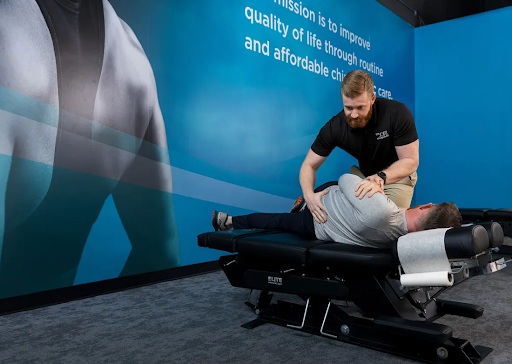
Sciatica has a way of taking over your day. You shift in your seat, trying to find a position that does not hurt. You stand up from the car and have to pause for a second before you can walk normally. You wake up in the middle of the night from leg pain. If any of that sounds like your week, a proper evaluation is worth doing.
If you are ready to find out what is causing your sciatica, just walk into one of our five Southeast Valley Chiropractic Clinics. No appointment or insurance is required. We will talk about your symptoms, discuss what is making them better or worse, and perform a focused examination of your lower spine and hips to determine exactly where the nerve irritation is coming from. If chiropractic care is appropriate based on what we find, you can receive your first adjustment during that same visit.
A $29 new patient visit includes your consultation, spinal exam, and first adjustment. Whether you are near Power Ranch, Mesa Gateway, Gilbert (San Tan Village), Queen Creek, or San Tan Valley, getting started is easy.
Returning patient? You can view our membership and returning patient pricing page here.
Never been to a chiropractor before? Our First Visit Guide walks you through exactly what to expect before you arrive.
Frequently Asked Questions About Chiropractic for Sciatica
Can a chiropractor actually fix sciatica?
Chiropractic care can fix sciatica when the cause is mechanical, meaning the spine is putting pressure on the nerve because of a restricted joint, a shifted vertebra, or a tight muscle. For those cases, adjustments that restore normal movement in the lower back often reduce that pressure and ease symptoms. How many visits does it take to see improvement?
Some people notice a real difference after just one or two visits, especially if the sciatica is relatively recent. Sciatica that has been building for months tends to take longer. A series of visits over several weeks or months is common, and your chiropractor can give you a personal treatment plan and timeline after the initial exam.
Is it safe to get adjusted when sciatica is flaring up badly?
Yes, when done by a licensed chiropractor who has evaluated you properly. Our chiropractors at The Joint adjust the technique based on how acute the symptoms are. If a full adjustment is not appropriate in the moment, there are gentler approaches that can still help without making things worse.
What is the difference between sciatica from a disc and sciatica from the piriformis muscle?
Disc-related sciatica comes from inside the spine, which is pressing on the nerve root. Piriformis-related sciatica happens when a muscle in the buttocks compresses the nerve further down. The symptoms can feel similar, but the treatment approach is a bit different. An exam with a chiropractor can help figure out which one is driving your symptoms.
Should I rest completely when sciatica is bad?
Resting for a day or two when the pain is severe is reasonable, but prolonged bed rest is rarely recommended. Gentle movement, short walks, and light activity are usually better than staying still for extended periods.
Do I need an appointment at The Joint Chiropractic in the Southeast Valley?
No. All five Southeast Valley locations, including Power Ranch, Mesa Gateway, Gilbert, Queen Creek, and San Tan Valley, offer walk-in care. Same-day visits are available, and no insurance is needed.
Living With Sciatica Doesn’t Have to Be Your Normal
If sciatica has been keeping you from hiking, playing pickleball, sitting through your commute, or getting a good night’s sleep, it is time to find out why. Waiting for the pain to pass on its own often means more time spent suffering while the structural issue deepens, whereas getting a prompt evaluation can significantly shorten your recovery time.
At The Joint Chiropractic, a licensed Doctor of Chiropractic will look closely at your spine and give you a straight answer about whether chiropractic care is the right fit for your sciatica. Getting the spine to move properly again takes pressure off the nerve, which allows the pain to lessen and fade away.
If you are ready to find relief from sciatica and get back to living your life, we are here to help you take that first step. Walk-ins are always welcome at our five Southeast Valley locations, with no appointment or insurance required. Whether you are near Power Ranch, Mesa Gateway, Gilbert (San Tan Village), Queen Creek, and San Tan Valley, your first visit, including the consultation, spinal exam, and adjustment, is $29.
Reference
Mayo Clinic Staff. (2022, December 21). Sciatica: Symptoms & causes. Mayo Clinic. https://www.mayoclinic.org/diseases-conditions/sciatica/symptoms-causes/syc-20377435
Trager, R. J., et al. (2024). Association between spinal manipulative therapy and lumbar spine reoperation after discectomy: a retrospective cohort study. BMC Musculoskeletal Disorders. https://medicalxpress.com/news/2024-01-reveals-significant-reduction-lumbar-spine.htm
Disclaimer
This article is for general informational purposes only and does not provide medical or chiropractic diagnosis or treatment recommendations for any individual person. Always consult a qualified healthcare professional for an examination, diagnosis, and personalized treatment plan.
Written by Dr. Craig Peterson, DC
The Joint Chiropractic, Southeast Valley, Arizona

5 Stretches You Can Try at Home for Lower Back Pain and Tightness
Quick Highlights The Cause: Tight hips, hamstrings, and lower back muscles are one of the most common drivers of everyday back stiffness. The Routine: A short set of daily stretches, held gently rather than forced, can ease tension that builds up from sitting and...

Is It Safe to Crack Your Own Back?
Quick Highlights The Sound: That pop is just gas releasing inside the joint, not bones grinding or anything breaking. The Risk: Occasional cracking is usually harmless, but habitual self-cracking can loosen the wrong joints and mask a real problem. The Difference:...

Core Exercises for Back Pain: How to Strengthen and Support Your Lower Back
Quick Highlights A strong core helps support and stabilize your spine during everyday movements like bending, lifting, twisting, and even getting out of a chair. When those muscles aren't doing their share of the work, your lower back can take on more stress. In this...
The Difference Between Acute and Chronic Back Pain
Quick Highlights Not all back pain is treated the same way. Understanding the difference between acute and chronic back pain can help you know what to expect and which treatment approach may be right for your symptoms. In this guide, you'll learn: How to tell if your...

Ergonomics for Desk Workers in Arizona: What Your Back Is Trying to Tell You
Quick Highlights If your back hurts after sitting at your desk all day, your workstation may be a contributing factor. Poor desk ergonomics, prolonged sitting, and limited movement are among the most common causes of desk-related back pain. In this guide, you'll...

Chiropractic for Hip Pain: How Pelvic Alignment Can Affect Your Hips
If your hip hurts every time you stand up, walk, or sleep on your side, the problem may not actually be your hip joint. Patients come in thinking they have a hip problem. Often, we find the pain is actually coming from the pelvis or sacroiliac joint. When the pelvis...