
Quick Highlights
- The Sound: That pop is just gas releasing inside the joint, not bones grinding or anything breaking.
- The Risk: Occasional cracking is usually harmless, but habitual self-cracking can loosen the wrong joints and mask a real problem.
- The Difference: Self-cracking moves whatever joint is already loosest. A chiropractic adjustment targets the specific joint that’s actually restricted.
- Easy Local Access: The Joint Chiropractic offers convenient walk-in care at our five Southeast Valley locations, with no appointments or health insurance required.
- New Patient Offer: Your initial visit is only $29 and includes your consultation, a comprehensive spinal exam, and your first adjustment.
Why Does Your Back Crack or Pop?
“I twist at my desk, and it pops, and honestly, it feels amazing.” That relief is real, but it’s worth understanding what’s actually happening before making it a daily habit.
That pop is gas releasing from the synovial fluid inside a joint, the same fluid that cushions and lubricates the small joints along your spine. When a joint is stretched or moved quickly through its range of motion, gas bubbles in that fluid release quickly, creating the sound. It’s the same mechanism behind cracking your knuckles.
The sound itself doesn’t mean anything broke, shifted, or realigned. It’s simply a byproduct of a joint moving through its range of motion.
Why Does Cracking Your Back Feel Good?
When you crack your back, you are stretching the small joints in your spine. This stretch lowers the pressure inside the joint fluid, causing dissolved nitrogen and carbon dioxide to quickly pop into tiny bubbles that then collapse. That sudden pop releases built-up pressure and triggers sensory nerves in the area. Those nerves tell your tight back muscles to relax, while your brain releases a small rush of natural feel-good chemicals called endorphins.
The main reason you feel like cracking your back again later is that popping your joints only gives you short-term relief. It does not fix the root causes of back tightness, like sitting all day or having poor posture. On top of that, it takes about twenty to thirty minutes for those released gases to dissolve back into your joint fluid. Once the fluid resets and pressure builds back up, the stiffness comes back, tempting you to pop your back all over again.
Is It Safe to Crack Your Own Back or Neck?
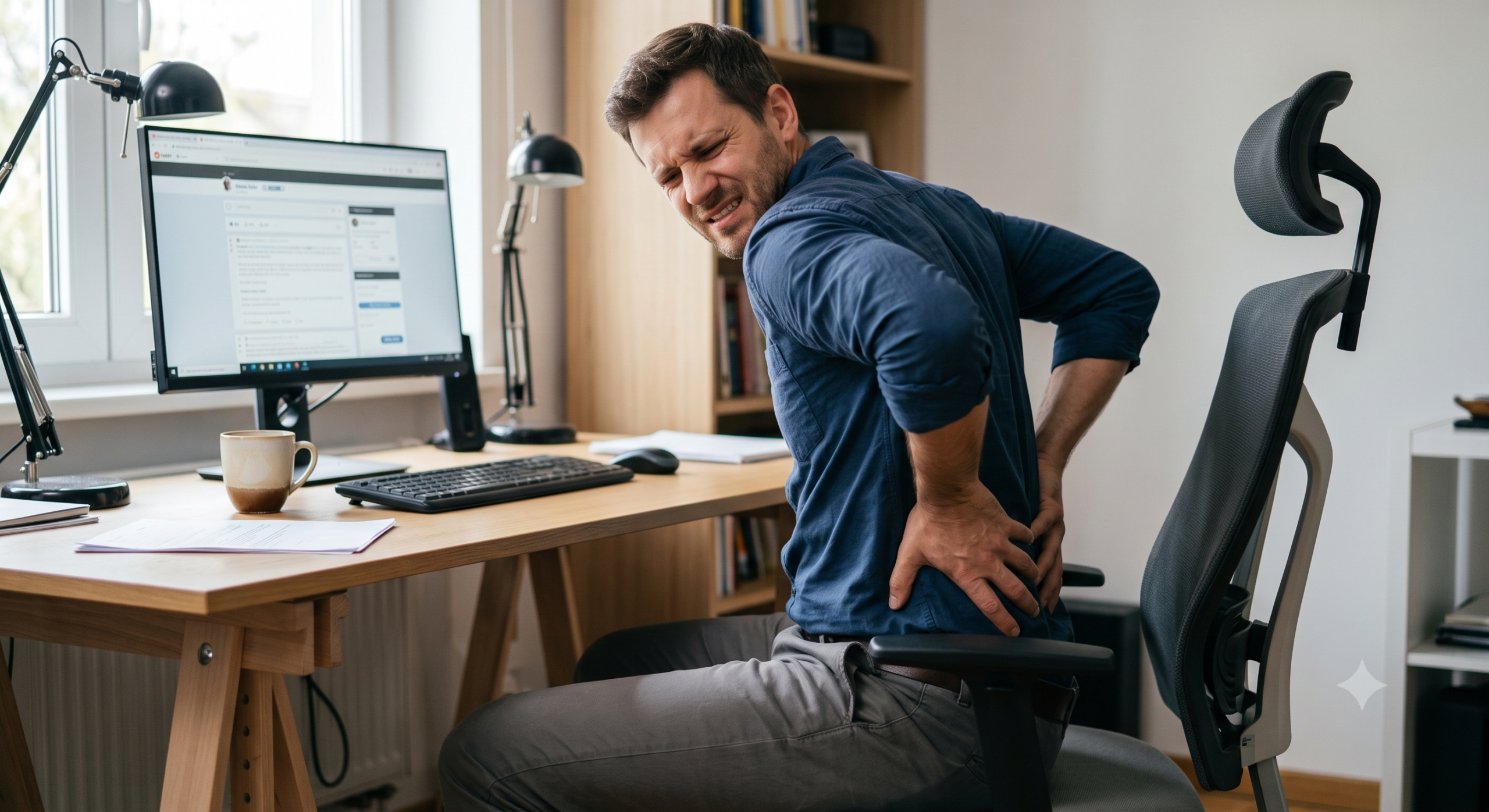
An occasional pop while stretching is generally harmless and usually just means gas bubbles are moving through your joint fluid. However, repeatedly or forcefully cracking your spine to force a pop is a different story. Doing it constantly can strain surrounding ligaments, irritate joints, and mask underlying issues like chronic muscle imbalance or spinal misalignment.
Can Cracking Your Back or Neck Cause Arthritis?
Current medical evidence shows that habitual joint cracking does not directly cause osteoarthritis. Studies examining long-term joint cracking, most famously on knuckles but applicable to similar joints in the spine, have found no significant link between the habit and an increased risk of arthritis. Wear-and-tear arthritis is primarily driven by age, genetics, past injuries, and biomechanical stress rather than gas bubble cavitation.
Can You Hurt Yourself Cracking Your Own Back or Neck?
Yes, you can injure yourself if you force your back or neck past its normal range of motion. The spine houses delicate nerve structures and major blood vessels that require careful handling:
- Neck Risks: The neck contains the vertebral arteries, which supply blood to the brain. Aggressive, high-velocity twisting of the neck can potentially cause arterial dissection, a serious injury that dramatically increases the risk of stroke.
- Nerve and Soft Tissue Strain: Forceful self-manipulation can overstretch supporting ligaments, leading to joint instability. It can also pinch spinal nerves, trigger severe muscle spasms, or worsen an existing herniated disc.
The research notes that spinal manipulation performed by a trained professional like our chiropractors carries a well-documented safety profile, a standard that isn’t the same when the same motion is applied by an untrained hand, including your own.
Aggressive self-manipulation of the neck deserves extra caution. Forceful twisting through the upper spine carries more risk than a gentle low back stretch, so if a crack requires real force to produce, that’s a sign to stop rather than push harder.
For reference, even the chiropractors on our own team at The Joint Chiropractic do not manipulate (pop) their own neck or backs. It is much safer and more effective to have another chiropractor adjust you. Ask any chiropractor.
Why Self-Cracking Is Different From a Chiropractic Adjustment
When you twist or turn your own back to make it pop, you can’t control exactly which joint moves. Your body tends to move through the areas where you can create the most leverage, which means you may repeatedly pop the same joints instead of the area that’s actually restricted.
That’s one reason the relief from self-cracking can be short-lived. You may feel looser temporarily, but if the stiffness keeps returning, you’ll find yourself cracking the same area repeatedly.
That area that is “too loose” from self-cracking can become unstable or can be a major future problem if you were to get into a car accident or experience any other physical injury. The loose area will be the first to be injured since it is the least stable in the spine.
What to Expect at Our Southeast Valley Clinics
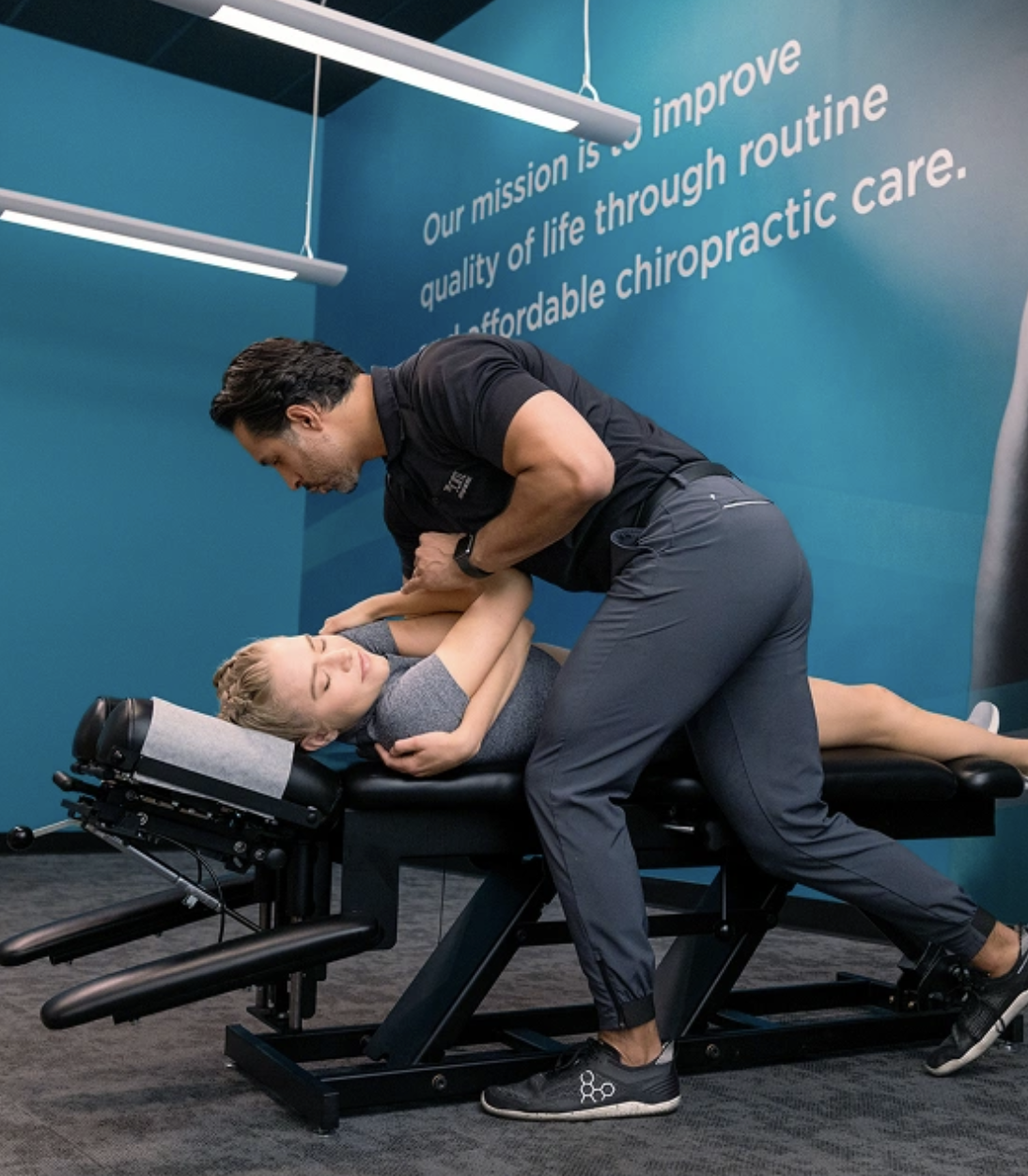
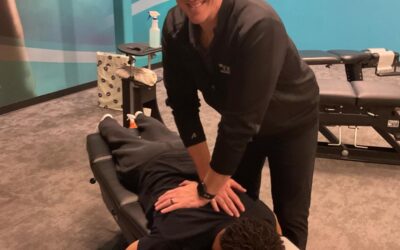
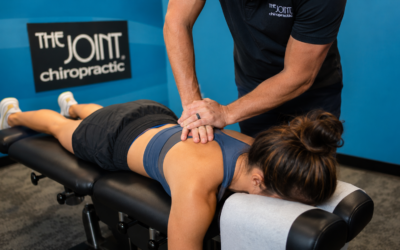
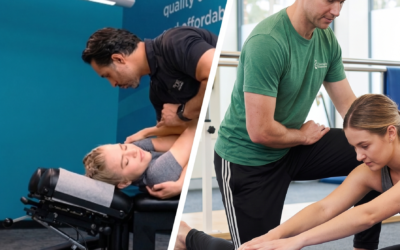
A professional chiropractic adjustment starts with an evaluation. A licensed Doctor of Chiropractic examines how your spine is moving and looks for areas of restricted joint motion. When an adjustment is appropriate, the chiropractor can use controlled, targeted force rather than simply twisting until something pops. That’s an important difference between a chiropractic adjustment and cracking your own back.
At The Joint Chiropractic, your visit starts with your health history and a focused spinal exam, and if an adjustment makes sense, it can happen that same day. There’s no appointment needed and no insurance required. You can review your options ahead of time on the pricing page.
If you’d like to know what a first visit involves from start to finish, take a look at our guide on what to expect at your first chiropractic visit.
Frequently Asked Questions About Cracking Your Own Back
Is it bad to crack your own back?
Occasional cracking is generally not harmful, especially if it naturally happens with movement. The concern is repetition and forced twisting. Cracking the same joint constantly can loosen the surrounding ligaments and lead to instability over time, leaving it much more prone to injury.
Why does my back feel like it needs to crack all the time?
That urge is usually a sign that a specific joint is genuinely restricted. Self-cracking tends to relieve nearby areas instead of the actual problem, which is why the urge keeps coming back.
Is a chiropractic adjustment the same as cracking your own back?
No. A chiropractor identifies the specific joint that’s restricted and applies a controlled, targeted force to that segment. Self-cracking typically moves whichever joint is already loosest, which usually isn’t the one causing the problem. Any joint can be cracked. The secret is knowing which joints need to be cracked and when. Huge difference.
Do I need an appointment at The Joint Chiropractic in the Southeast Valley?
No. All five Southeast Valley locations, including Power Ranch, Mesa Gateway, San Tan Village, Queen Creek, and San Tan Valley-Gilbert, offer walk-in chiropractic care with no appointment and no insurance needed.
Stop Chasing Temporary Pops and Fix the Underlying Joint Problems
If your lower back locks up every afternoon or feels rigid the second your feet hit the floor, stretching alone won’t always solve it. Stretching tight muscles around a jammed spinal joint is like pulling on a knotted rope.
At The Joint Chiropractic, our licensed Doctors of Chiropractic pinpoint the exact joints causing your restriction. By restoring proper alignment, we take the physical stress off surrounding muscles so your stretches can actually work.
Walk into any of our five Southeast Valley locations today with no appointments or insurance needed.
The $29 new patient visit covers your consultation, spinal exam, and first adjustment. Walk into your nearest southeast valley clinic today: Power Ranch, Mesa Gateway, San Tan Village, Queen Creek, and San Tan Valley-Gilbert
Disclaimer
This article is for general informational purposes only and does not provide medical or chiropractic diagnosis or treatment recommendations for any individual person. Always consult a qualified healthcare professional for an examination, diagnosis, and personalized treatment plan.
References
National Center for Complementary and Integrative Health. (2023). Chiropractic: In depth. U.S. Department of Health & Human Services. https://www.nccih.nih.gov/health/chiropractic-in-depth
Nichols, H. (2023, April 25). Cracking the knuckles and other joints: Does it cause arthritis? Medical News Today. https://www.medicalnewstoday.com/articles/259603