
Quick Highlights
In this guide, you’ll learn:
-
- Which common low back pain myths can actually slow down your recovery.
- Whether bed rest or movement is better when your lower back hurts.
- Why back pain doesn’t always mean something is seriously wrong.
- Whether sitting, posture, stress, and everyday activities can contribute to low back pain.
- What research says about chiropractic care for low back pain.
- What you can do to stay active and support your recovery.
Table of Contents
- What Are the Most Common Myths About Low Back Pain?
- What Does Research Say About Chiropractic Care for Low Back Pain?
- What Helps With Low Back Pain Recovery?
- Should You Rest or Keep Moving With Low Back Pain?
- Can Sitting and Posture Contribute to Low Back Pain?
- How Chiropractic Care Helps With Mechanical Low Back Pain
- Southeast Valley Visits: What to Expect at The Joint Chiropractic
- Frequently Asked Questions About Low Back Pain Myths
If you’ve spent the weekend hauling bags and shopping in San Tan Village, coaching a game at the Queen Creek soccer fields, or hunched over a desk all week in Gilbert, you’ve put your lower back through the same repetitive stress we see every day in our clinics. “I stayed in bed for three days, and it just got stiffer.” “I figured if it hurt to move, I shouldn’t move.” These are some of the most common things patients tell us, and almost all of them trace back to the same problem: outdated advice that never got corrected.
What Are the Most Common Myths About Low Back Pain?
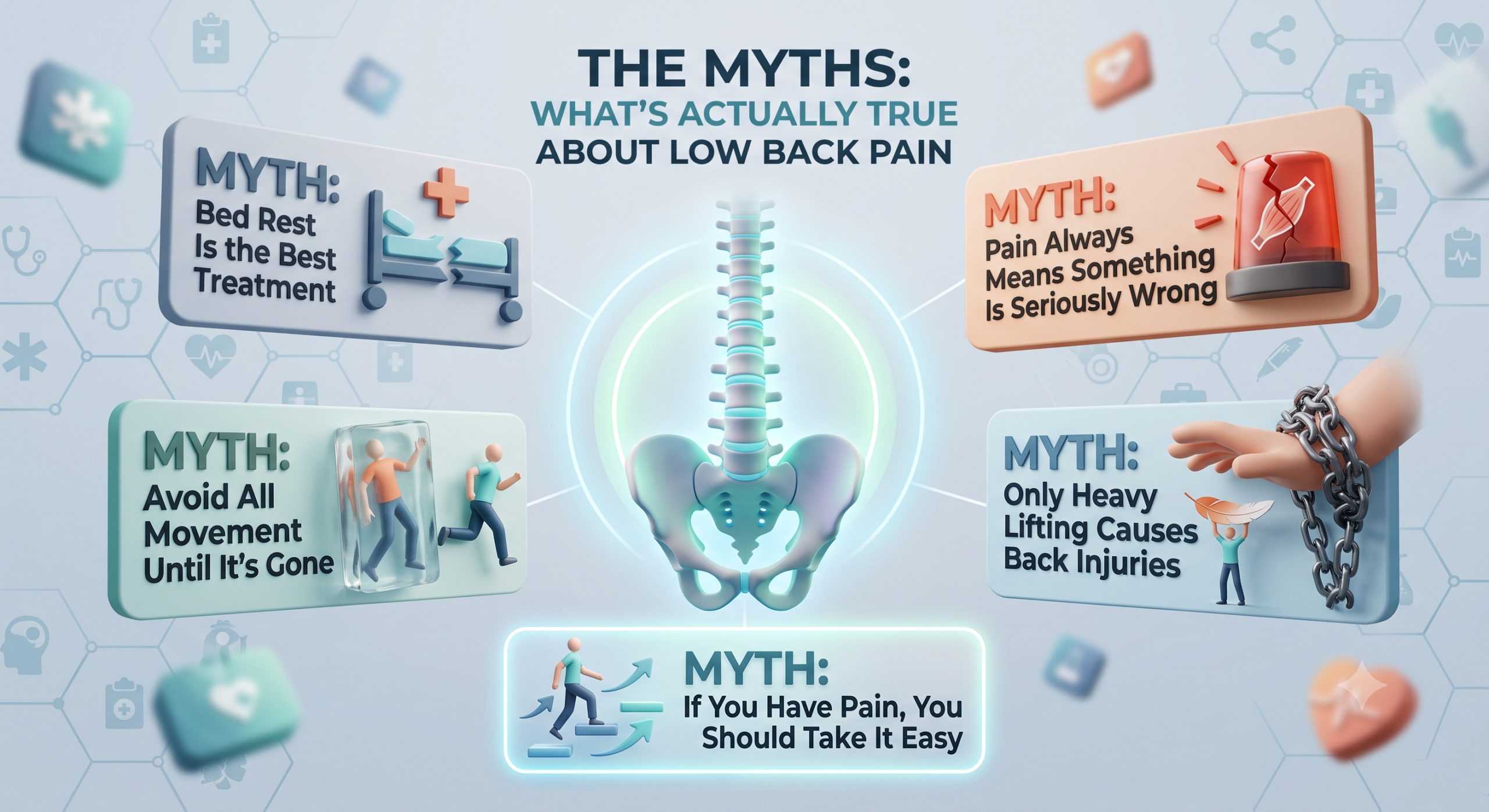
Myth: Bed Rest Is the Best Treatment
Prolonged bed rest does more harm than good for mechanical lower back pain. Inactivity causes the surrounding spinal muscles to spasm and weaken, while the spinal joints lose lubricating synovial fluid and the supporting ligaments stiffen and lose elasticity.
This lack of movement increases pressure on the back and prolongs recovery. In contrast, staying gently active within a pain-free range circulates nutrients to your joints, maintains ligament flexibility, and promotes a much faster return to normal function.
Myth: Back Pain Always Means Something Is Seriously Wrong
Most low back pain is mechanical, coming from strained muscles, joint irritation, or stiffness rather than a structural problem, even though it can feel alarming when it shows up out of nowhere. If your pain travels down one leg specifically, that’s a different pattern worth knowing about. Our guide on chiropractic care for sciatica breaks down what that looks like and how to treat it.
Myth: You Should Avoid All Movement Until It’s Gone
Staying completely still for too long often backfires. Joints stiffen, muscles tighten further, and the area gets more sensitive to movement, not less. Light activity, like walking or simply changing positions throughout the day helps keep things from locking up.
Myth: Only Heavy Lifting Causes Back Injuries
Lifting the wrong way can trigger back pain, but prolonged sitting, poor posture, and stress contribute to just as many cases, especially for desk workers and anyone spending long hours behind the wheel on the 202 or 60.
Myth: Pain Medication Is the Only Fast Route to Relief
Pills may mask the immediate discomfort, but they do not address the underlying joint restrictions or muscular imbalances causing the issue. Passive reliance on medication often leads to recurring flare-ups once the dose wears off. Non-invasive physical therapies, such as targeted adjustments and gentle movement protocols, focus on restoring biomechanical function so the body can resolve the root cause of the strain naturally.
Myth: Once You Have Back Pain, It Is Bound to Become Chronic
Experiencing an acute flare-up does not mean you are destined for a lifetime of back problems. The spine is a durable, resilient structure that can fully recover with the right habits. Addressing mechanical restrictions early through conservative care, building core stability, and maintaining daily movement patterns can prevent short-term irritation from becoming long-term dysfunction.
What Does Research Say About Chiropractic Care for Low Back Pain?
According to the National Institutes of Health, several of the most common beliefs about low back pain, including the idea that rest is best and that pain always signals serious damage, are not supported by current evidence. Mayo Clinic similarly points to staying active as one of the more effective approaches for most mechanical back pain.
Chiropractic care is one of the conservative options commonly recommended for this type of pain, focused on improving joint motion and reducing muscle tension without medication. It isn’t a fix for every type of back pain, and a licensed chiropractor should evaluate your specific symptoms before recommending a plan, but dismissing it as unproven isn’t supported by the research.
What Helps With Low Back Pain Recovery
Recovering from low back pain requires a combination of active movement, proper spinal alignment, and targeted inflammation control. Extended bed rest often prolongs recovery by stiffening and weakening muscles.
The following proven strategies help speed healing and protect the spine:
1. Gentle, Low-Impact Movement
Staying mobile encourages blood circulation and delivers essential nutrients to irritated spinal discs and soft tissues.
- Walking: Short 10- to 15-minute walks on flat surfaces keep hip and lumbar joints lubricated without placing excessive load on the back.
- Gentle Mobility Drills: Controlled movements such as pelvic tilts, cat-cow stretches, and knee-to-chest holds ease muscle guarding around the lower spine.
- Avoid Complete Inactivity: Limit bed rest to brief periods during acute spasms, and return to gentle movement as soon as possible.
2. Routine Spinal Adjustments
Mechanical restrictions in the lumbar spine and sacroiliac (SI) joints frequently trigger localized inflammation and muscle spasms.
- Restoring Joint Mechanics: Chiropractic adjustments realign restricted vertebrae, relieving pressure on irritated nerve roots.
- Decreasing Muscle Spasms: Aligning joint surfaces allows overworked stabilizing muscles in the low back and glutes to release tension naturally.
3. Targeted Hot and Cold Therapy
Applying temperature therapy correctly helps manage pain and control tissue swelling during different recovery phases.
- Ice for Acute Flare-Ups (First 48 Hours): Apply cold packs wrapped in a thin towel for 15 to 20 minutes at a time to numb sharp pain and constrict inflamed blood vessels.
- Heat for Stiff Muscles (After 48 Hours): Use moist heat pads or warm showers to relax chronic muscle tension and promote tissue elasticity before moving or stretching.
4. Core and Hip Strengthening
A stable muscular foundation prevents the lumbar spine from bearing the full burden of daily body weight.
- Deep Abdominal Support: Exercises like bird-dogs, glute bridges, and modified planks strengthen the transverse abdominis without twisting the lower back.
- Hip Flexor and Hamstring Flexibility: Tight hamstrings and hip flexors pull the pelvis out of neutral alignment, placing continuous strain on lumbar vertebrae.
5. Daily Posture and Ergonomic Corrections
Everyday habits directly determine how quickly low back tissue recovers from strain.
- Neutral Sitting Posture: Keep your feet flat on the floor, hips slightly above your knees, and place a lumbar roll behind the curve of your lower back.
- Smart Sleep Positions: Sleep on your side with a pillow between your knees, or on your back with a pillow beneath your knees, to keep the spine neutral overnight.
- Proper Lifting Mechanics: Bend at your knees and hips rather than rounding your lower back, holding heavy objects as close to your body as possible.
Should You Rest or Keep Moving With Low Back Pain?
Rehabilitation does not end after an adjustment. Incorporating light movement, such as low-impact walking, gentle pelvic tilts, and hamstring stretches, helps retrain supporting muscles to maintain proper alignment. Building consistent movement routines helps keep your spine adaptable, resilient, and better protected against future flare-ups during daily physical tasks.
Can Sitting and Posture Contribute to Low Back Pain?
Sustained sitting places high static pressure on the lumbar spine and pelvis. Adjust your car or office chair so your hips rest slightly higher than your knees, keep your lower back supported with a small lumbar cushion, and avoid slouching over keyboards or mobile screens. Setting regular timers to stand, stretch, and reset your posture helps minimize repetitive strain throughout the workday.
How Chiropractic Care Helps With Mechanical Low Back Pain
Chiropractic adjustments focus on restoring normal motion to restricted spinal segments. By applying a gentle, controlled force to specific joints, care helps decrease localized inflammation, reduce surrounding muscle tension, and relieve pressure on nearby nerves. This non-invasive approach works with your body’s natural mechanics rather than relying on temporary fixes.
Southeast Valley Visits: What to Expect at The Joint Chiropractic

If you’re ready to find out what’s actually causing your back pain, just walk into one of our Southeast Valley clinics. No appointment or insurance is required. We’ll talk about your symptoms and what’s making them better or worse and perform an exam to help pinpoint the cause. If chiropractic care is appropriate, you’ll receive an adjustment during that same visit.
Walk into your nearest Southeast Valley clinic today: Power Ranch, Mesa Gateway, Gilbert (San Tan Village), Queen Creek, and San Tan Valley
A licensed Doctor of Chiropractic will examine your spine, identify what your desk job has done to it, and explain the next step. Review options before your visit on the pricing page.
Frequently Asked Questions About Low Back Pain Myths
Is bed rest good for back pain? Not usually. Short-term rest is fine, but staying inactive for days tends to slow recovery.
Can a chiropractor help with chronic low back pain? For many people, yes. Chiropractic care may help improve joint mobility and reduce muscle tension, though results depend on the underlying cause.
When should I see a chiropractor for low back pain? If pain lingers for more than a day, worsens with movement or prolonged positions, an evaluation can help identify what’s contributing to it.
Do I need an appointment at The Joint Chiropractic in the Southeast Valley? No. All five Southeast Valley locations offer walk-in care with no insurance needed.
Getting Back to Normal Doesn’t Have to Wait
If your back has been holding you back, whether it is a sudden strain from this week or a dull stiffness you have put up with for years, it is time to find out why. Waiting for the pain to pass on its own often means more time spent suffering while the underlying strain deepens, whereas getting a prompt evaluation can significantly shorten your recovery time.
When you visit one of our Southeast Valley clinics, a licensed Doctor of Chiropractic will perform a consultation and spinal examination to understand what’s causing your back pain. From there, we’ll explain our findings, answer your questions, and recommend the most appropriate next steps based on your symptoms.
If chiropractic care is appropriate, treatment focuses on restoring normal joint motion and reducing unnecessary stress on your spine so you can move more comfortably.
Whether your back pain started this week or has been bothering you for years, every patient’s experience is different. Here are a few comments from patients who visited one of our Joint Chiropractic clinics for care.
“I started working out and pulled my left lower hip down through my thigh – very much like sciatica… I came in because I saw they were open on Sundays… [and received] great care.” — J. Borja
“Been dealing with back and neck pain a lot. Came here to get some relief… Almost instant relief I was looking for.” — D.Cowger
“I love this location because of the doctors. It’s been great and they listen to my needs and help provide helpful information and tips to help me feel good.” — Z. Shurtz
Ready to take the next step? Visit any of our five Southeast Valley clinics for a consultation, spinal examination, and adjustment. Walk-ins are always welcome, and your first visit is just $29. Read more reviews from our Power Ranch patients or find the location closest to you.
Disclaimer
This article is for general informational purposes only and does not provide medical or chiropractic diagnosis or treatment recommendations for any individual person. Always consult a qualified healthcare professional for an examination, diagnosis, and personalized treatment plan.
References
Golob, A. L., & Wipf, J. E. (2014). Low back pain: Myths and facts. PMC, National Library of Medicine. https://pmc.ncbi.nlm.nih.gov/articles/PMC6611834/
Mayo Clinic Staff. (2024, September 20). Back pain: Symptoms & causes. Mayo Clinic. https://www.mayoclinic.org/diseases-conditions/back-pain/symptoms-causes/syc-20369906