Quick Highlights
In this guide, you’ll learn:
-
- How chiropractic care improves mobility and range of motion.
- What can cause your back, neck, or joints to feel stiff or harder to move.
- How to tell when your range of motion is limited.
- Which everyday movements can become easier as mobility improves.
- How chiropractic adjustments help restricted joints move more freely.
- What affects how quickly you notice changes in stiffness or mobility.
- What to expect when seeing a chiropractor for limited mobility.
Table of Contents
- What Causes Spinal Stiffness and Limited Mobility?
- Key Signs You Have Restricted Spinal Mobility
- How Chiropractic Adjustments Work to Increase Spinal Mobility
- What Everyday Movements Can Improve With Better Mobility?
- How Long Does It Take to Notice Better Mobility With Chiropractic Care?
- What to Expect When You See a Chiropractor for Limited Mobility
- Frequently Asked Questions About Chiropractic Care and Mobility
What Causes Spinal Stiffness and Limited Mobility?
Do you feel stiff when getting out of bed in the morning, or do you struggle to turn your head completely while checking your blind spot?? A restricted range of motion is one of the most frequent health complaints among adults today.
Your spine is composed of 24 individual movable vertebrae connected by complex facet joints, shock-absorbing intervertebral discs, and a network of supporting ligaments and tendons. When these structures operate smoothly, you enjoy effortless flexibility during daily activities.
However, modern lifestyle habits frequently compromise this delicate system. Hours spent sitting at a computer desk, looking down at smartphone screens, or engaging in repetitive physical labor place asymmetric stress on spinal segments. Over time, individual vertebrae can lose their proper spatial alignment and micro-mobility, a state chiropractors refer to as a “joint fixation”, “misalignment,” or “subluxation.”
When facet joints become restricted, surrounding muscles contract into protective spasms. This inflammatory response leads to localized swelling, fluid buildup, and painful stiffness. If left uncorrected, restricted joint movement speeds up degenerative joint changes and leads to long-term mobility loss. Seeking timely chiropractic care helps break this cycle by restoring natural joint movement before scar tissue sets in.
Key Signs You Have Restricted Spinal Mobility
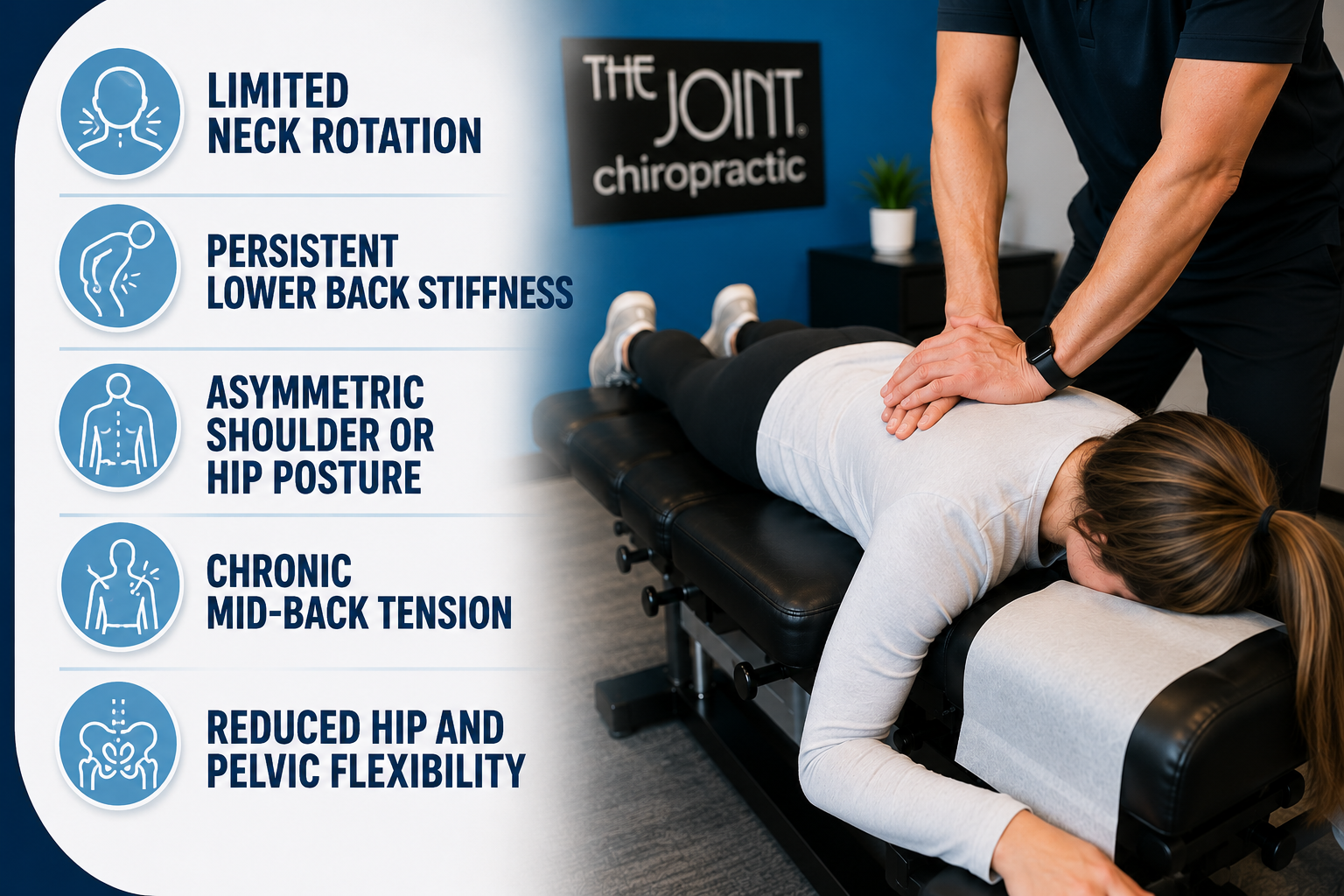
Spinal stiffness often begins gradually before progressing into debilitating movement restrictions. Recognizing the early warning signs allows you to address structural imbalances promptly:
- Limited Neck Rotation: Inability to look over your shoulder comfortably while driving or turning your head without rotating your entire upper body.
- Persistent Lower Back Stiffness: Difficulty bending forward to tie your shoes or standing up straight after sitting for extended periods.
- Asymmetric Shoulder or Hip Posture: Noticing in the mirror that one shoulder rests higher than the other or feeling as though your hips are unlevel while walking. Uneven hips can make one leg appear to be longer than the other.
- Chronic Mid-Back Tension: A tight, burning sensation between your shoulder blades that worsens with prolonged sitting or deep breathing.
- Reduced Hip and Pelvic Flexibility: Tightness through the lower spine and pelvis that shortens your stride length or makes climbing stairs uncomfortable.
How Chiropractic Adjustments Work to Increase Spinal Mobility
Chiropractic care focuses on restoring normal biomechanical motion to restricted joints through precise manual therapy. A systematic review on spinal manipulation for acute musculoskeletal injuries demonstrated that conservative spinal adjustments significantly improve joint range of motion, relieve localized discomfort, and support functional physical recovery.
When a chiropractor performs a targeted adjustment, a gentle, quickforce is applied to specific locked joints. This therapeutic action produces several key physical benefits:
- Joint Decompression and Realignment: Adjustments restore full movement to restricted facet joints, release trapped gas bubbles within the joint capsule, and reduce intra-articular pressure.
- Reduction of Neuromuscular Guarding: Realigning the spine resets nerve reflexes and relaxes hypertonic, spasming paraspinal muscles.
- Enhanced Synovial Fluid Circulation: Restoring joint motion helps circulate essential nutrients and lubricating fluid throughout cartilage tissue, keeping joints flexible and healthy.
- Breaking Down Micro-Adhesions: Gentle mobilization breaks up dense scar tissue and fascial tightness that restricts flexibility around chronic injury sites.
What Everyday Movements Can Improve With Better Mobility?
Better mobility restores functional freedom, making routine physical tasks feel fluid and pain-free rather than strained. When your joints, spine, and surrounding soft tissues move through their full, unrestricted range of motion, key daily activities become significantly easier:
- Bending Down and Tying Shoes: Improved hip hinge mechanics and lower-back flexibility eliminate the pinch or stiffness often felt when reaching toward the floor.
- Checking Blind Spots While Driving: Restoring cervical (neck) spine rotation allows you to turn your head smoothly without straining your upper back or compensating with your shoulders.
- Reaching Overhead: Proper thoracic spine extension and shoulder mobility allow you to grab items from high cabinets or lift luggage without arching your lower back.
- Getting Out of Bed or Off the Couch: Healthy pelvic alignment and spinal mobility remove morning stiffness, letting you stand up upright immediately without hesitation.
- Walking, Squatting, and Climbing Stairs: Coordinated ankle, knee, and hip mobility distributes impact evenly, protecting weight-bearing joints from premature fatigue and wear.
How Long Does It Take to Notice Better Mobility With Chiropractic Care?
Most patients notice an initial improvement in mobility within 1 to 4 visits. Achieving long-term, stable joint function typically takes 4 to 8 weeks of consistent treatment.
The recovery timeline generally moves through three stages:
Stage 1: Joint Relief (Days 1 to 7) Targeted spinal adjustments release restricted joints and reduce local pressure. Patients often feel an immediate reduction in tightness and a wider range of motion within the first two appointments.
Stage 2: Muscle and Ligament Retraining (Weeks 2 to 4) Surrounding muscles, tendons, and ligaments need repeated adjustments to stop reverting to poor movement patterns. Over 4 to 8 visits, soft tissues adapt to proper alignment, allowing everyday actions like turning your neck or bending down to happen without discomfort.
Stage 3: Stabilization (Weeks 4 to 8 and Beyond) Once joint mechanics normalize, visits focus on holding the correction. Combining periodic adjustments with targeted stretching and posture changes keeps joints mobile under daily physical strain.
Key Factors That Affect Recovery Time
- Duration of the Issue: Sudden stiffness from a muscle strain resolves much faster than years of chronic poor posture.
- Joint Health: Pre-existing arthritis, previous injuries, or disc wear require more time to regain functional range of motion.
- Daily Habits: Sitting for long periods, poor sleep posture, and dehydration slow down progress, while regular walking and ergonomic desk setups speed it up.
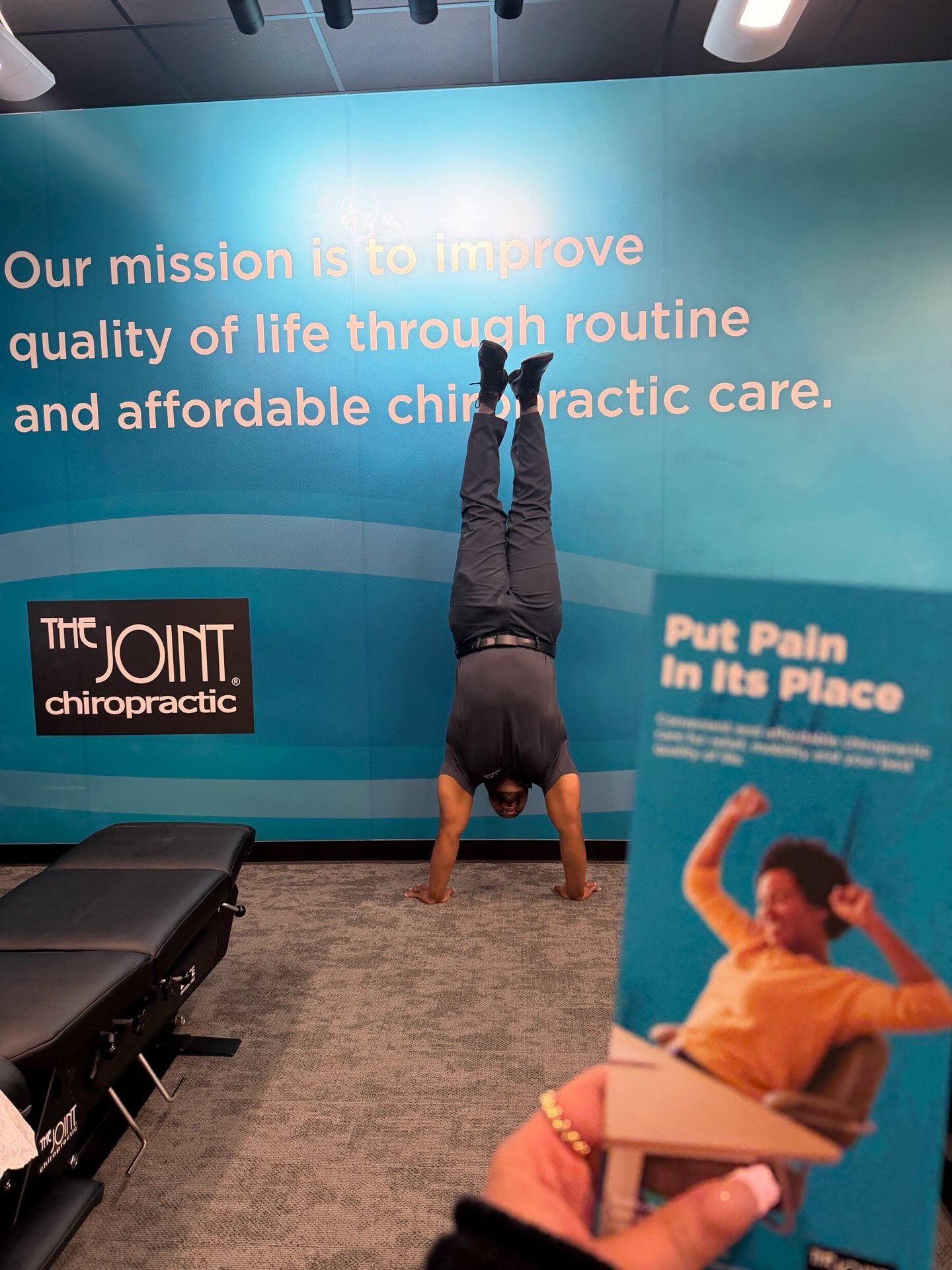
What to Expect When You See a Chiropractor for Limited Mobility
Ignoring persistent joint tightness or waiting for stiffness to resolve on its own can allow minor subluxations to turn into severe mobility limitations. Restoring healthy biomechanics early is the best way to maintain long-term independence and physical comfort.
At The Joint Chiropractic, our licensed Doctors of Chiropractic are dedicated to helping you move freely, reduce joint stress, and improve your daily quality of life through personalized care.
In our Google reviews, local residents consistently share how regular walk-in adjustments have helped them regain flexibility and eliminate daily discomfort.
Here are the few examples:
“I found The Joint while I was having a terrible time with sciatica and couldn’t take the pain anymore. One visit fixed me, so I went back for a follow-up and have been visiting regularly ever since.” — C. Halvorson
“I came in with chronic neurological issues I’ve been dealing with for the last year or two that have cost me much of my physical/emotional enjoyment in life and Dr. Porterfield has been nothing but attentive and excellent” — D. Scher
“I came in with extremely painful neck pain. I received my first adjustment at a price point I found quite reasonable.” — K. TUV
Walk-ins are always welcome at our five Southeast Valley clinics with no appointment or insurance required. Visit us today to claim your $29 new patient consultation, mobility examination, and initial chiropractic adjustment.
If chiropractic adjustments fit your health goals, gentle, targeted care can begin during that same appointment. Our $29 new patient special covers your consultation, spinal exam, and initial adjustment. Review all affordable plan options on our pricing page.
Visit your nearest Southeast Valley location today: Power Ranch, Mesa Gateway, San Tan Village, Queen Creek, and San Tan Valley-Gilbert.
For additional details on preparing for your first evaluation, check out our helpful guide on what to expect at your first chiropractic visit.
Frequently Asked Questions About Chiropractic Care and Mobility
How does chiropractic care help increase spinal mobility?
Chiropractic adjustments correct joint restrictions in the vertebrae. Realigning restricted joints restores normal mechanics, reduces surrounding muscle tension, and improves flexibility across the entire spine.
How many visits does it take to notice an improvement in mobility?
Many patients report noticeable improvements in flexibility and reduced stiffness after their very first few adjustments. However, chronic stiffness may require a structured care plan to achieve long-lasting mobility goals.
Is chiropractic care safe for older adults experiencing age-related stiffness?
Yes. The Joint Chiropractors tailor our techniques to match each patient’s age and health condition. Gentle mobilization methods safely improve flexibility and balance in seniors without forceful strain.
Do I need an appointment at your Southeast Valley locations to get evaluated?
No. All five of our Southeast Valley clinics, including Power Ranch, Mesa Gateway, San Tan Village, Queen Creek, and San Tan Valley-Gilbert, welcome walk-in patients six days a week.
Disclaimer
This article is for general informational purposes only and does not provide medical or chiropractic diagnosis or treatment recommendations for any individual person. Always consult a qualified healthcare professional for an examination, diagnosis, and personalized treatment plan.
References
Goertz, C. M., et al. (2013). Effect of usual medical care plus chiropractic care vs usual medical care alone on pain and disability among active-duty military personnel with low back pain: a randomized controlled trial. Spine. https://www.ncbi.nlm.nih.gov/pmc/articles/PMC3716373/