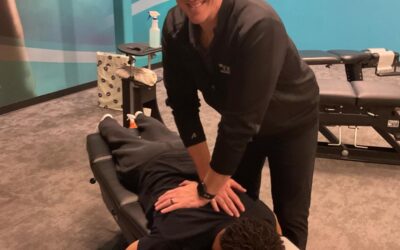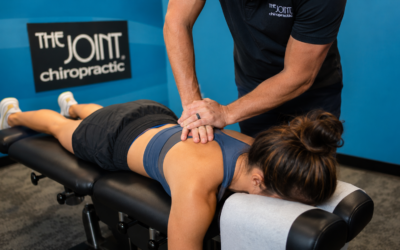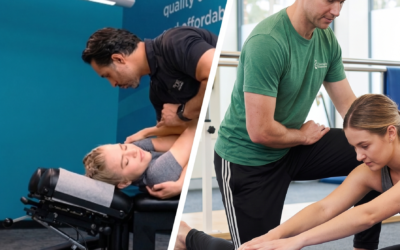

If your hip hurts every time you stand up, walk, or sleep on your side, the problem may not actually be your hip joint.
Patients come in thinking they have a hip problem. Often, we find the pain is actually coming from the pelvis or sacroiliac joint. When the pelvis tilts or shifts out of its neutral position, everything connected to it gets pulled along. The hip joint takes the brunt of that.
Our chiropractors look at hip pain through this lens. Not just the joint itself, but the alignment of the whole pelvis and how the lower spine and sacroiliac joints are contributing. This guide covers what that means, who tends to deal with it, and what care actually looks like.
Quick Highlights
- The Pelvic Connection: The sacroiliac joint connects the pelvis to the base of the spine. When it gets restricted or inflamed, it causes pain in the lower back, hip, groin, and upper leg that is easily mistaken for sciatica.
- The Posture Strain: A pelvis that tilts or sits unevenly alters how your hip joint carries your body weight. Over time, this mechanical shift causes progressive hip pain, stiffness, and loss of motion.
- Targeted Recovery: Hip pain that worsens when climbing stairs, standing up from a chair, or sleeping on your side at night is a classic sign of pelvic alignment issues.
- Evidence-Based Relief: A clinical study found that just four sessions of chiropractic adjustments delivered significant improvements in both pain levels and physical function for people with sacroiliac joint problems.
- Targeting the Root Cause: Adjustments to the pelvis, lumbar spine, and sacroiliac joints restore structural balance, directly relieving the uneven physical load that irritates the hip joint.
- Hassle-Free Local Access: The Joint Chiropractic provides walk-in, same-day care with no appointments or insurance required across our five convenient Southeast Valley clinics.
- New Patient Special: Your first visit is just $29 and covers your comprehensive consultation, focused structural examination, and initial adjustment.
Table of Contents
- How Can Pelvic Alignment Affect Hip Pain?
- How Pelvic Misalignment Leads to Hip Pain
- What Does Hip Pain From Pelvic Issues Feel Like?
- Who Is More Likely to Develop Hip Pain From Pelvic Issues?
- What Does Research Say About Chiropractic Care for Hip Pain?
- Can a Chiropractor Help With Hip and Pelvic Pain?
- How Can You Prevent Hip Pain From Getting Worse?
- Where Can You Find a Chiropractor for Hip Pain in the Southeast Valley?
- FAQs About Hip Pain and Chiropractic Care
How Can Pelvic Alignment Affect Hip Pain?
The pelvis is the foundation on which everything above and below it sits. It connects your spine to your legs. It distributes your body weight every time you stand, walk, or bend. It houses the hip joints on each side, where the top of your femur fits into the socket of the pelvis.
When the pelvis is in a neutral, balanced position, your hips move freely, and the load gets distributed evenly. But when the pelvis tilts or shifts to one side, that balance breaks down. One hip starts carrying more weight than the other. The muscles around the joint start compensating. The sacroiliac joints get pulled in directions they were not designed for.
Over time, all of that adds up. What started as a subtle mechanical imbalance can turn into hip pain that does not go away on its own.
How Pelvic Misalignment Leads to Hip Pain
Think of your hip joint like a perfectly balanced hinge designed to move smoothly in every direction. When your pelvis is level, your hip moves without a hitch, and everything works exactly as it should.
But when your pelvis tilts or shifts out of alignment, your hip socket moves right along with it. Suddenly, the leg bone isn’t sitting centered in the socket anymore. The surrounding muscles and tendons get tugged and loaded unevenly. Some get tightly locked up, while others get overstretched, which causes friction inside the joint.
This mechanical stress doesn’t always hurt right away. Instead, the ache builds up slowly over weeks or months of carrying that uneven weight until your hip finally signals for help.
The sacroiliac (SI) joints connect your spine to your pelvis and can also contribute to hip pain. When an SI joint becomes restricted or irritated, it can cause pain in the hip, buttock, groin, or down the thigh. Many of our patients come in thinking they have a hip problem, but the SI joint is often contributing to their symptoms. During your first visit, our chiropractor will evaluate both the hip and the pelvis to determine where the pain is coming from.
What Hip and Pelvic Pain Feels Like

When patients come into our clinic struggling with hip pain from pelvic alignment issues, they usually describe the same frustrating daily patterns:
- The First Step is the Worst: Standing up after a long meeting or a long drive feels incredibly stiff. That first step hurts, then it loosens up slightly as you walk, only to lock right back up the moment you sit down again.
- Daily Workarounds: Getting in and out of the car becomes a chore that requires planning, and simply bending down to put on your socks in the morning turns into a major physical maneuver.
- Interrupted Sleep: You can’t sleep comfortably on your side anymore. You might fall asleep fine, but by 2 a.m., the hip you are lying on starts to throb with a deep ache that wakes you up.
Our patients often describe this as a deep, dull ache rather than a sharp pain. It tends to travel to the tailbone, the outer hip, and the groin, making it hard to pinpoint just one single spot. That vague, spreading ache is actually a major clue for our chiro. It usually means your sacroiliac joint or the surrounding muscles are tight and irritated, rather than a problem with the actual hip joint itself.
Other common symptoms include the following.
- Deep aching in one side of the buttock or hip that does not fully go away
- Pain when standing up from sitting, especially after long periods of being still
- Stiffness and discomfort when walking after rest, which loosen up within a few minutes
- Pain that flares when climbing stairs or stepping up a curb
- Tenderness on the outer side of the hip, particularly when pressed
- Discomfort lying on the affected side at night
- A feeling that one leg is slightly shorter or that your gait is uneven
Who is Most at Risk for Hip Pain from Pelvic Misalignment
People Who Sit for Most of the Day
Long hours of sitting keep the hip flexors in a shortened position and put the pelvis in a forward tilt. Office workers, remote workers, students, and drivers all fit this category. The problem is not the sitting itself. It is the lack of movement in between. The pelvis adapts to the position you hold most often, and over months and years, that adaptation can become a problem.
People with Physically Demanding Jobs
Repeated bending, lifting, or loading on one side of the body can cause the pelvis to develop a lateral tilt over time. Construction workers, warehouse staff, healthcare workers, and tradespeople often develop one-sided patterns that show up as hip or lower back pain after years of work.
Women Who Have Been Pregnant
Pregnancy loosens the ligaments that hold the pelvis together, which is necessary for childbirth. After delivery, those joints do not always return to their pre-pregnancy position on their own. Hip pain, sacroiliac pain, and pelvic instability are common postpartum complaints that often respond well to chiropractic care.
Active People and Athletes
Many of our Southeast Valley trainees who train heavily without balancing their hip flexors and glutes can develop pelvic tilt patterns that lead to hip pain over time. If one side of the pelvis is chronically tighter than the other, the hip joint on that side absorbs more impact with every stride or pedal stroke.
Adults Over 40
With age, the muscles that stabilize the pelvis naturally lose some strength and tone if they are not actively maintained. Joints that have been slightly off for years start to show cumulative wear. Hip pain that begins gradually in your forties or fifties often has its roots in alignment patterns that have been present for a long time.
What the Research Says
A randomized clinical trial published in the Journal of Manipulative and Physiological Therapeutics looked at 60 patients with sacroiliac joint syndrome. All of them received chiropractic adjustments over four sessions across two weeks. Both groups showed significant improvements in pain scores and disability measures from the first to the last visit.
For sacroiliac joint problems, which are a major driver of hip and pelvic pain, chiropractic adjustments produced meaningful results over a period of time.
Can a Chiropractor Help With Hip and Pelvic Pain?
Chiropractic care for hip and pelvic pain is not just about adjusting the hip. The goal is to identify where the mechanical imbalance is coming from and address it there.
What Does a Chiropractor Check for With Hip Pain?
Our chiropractor will take a detailed history of your hip pain. Where it is, when it started, and what makes it better or worse. Then they will assess your posture, look at how you walk, check how your pelvis sits when you stand, and evaluate the range of motion in your hip and lumbar spine.
They will also palpate the sacroiliac joints, the hip joints and muscles, and the surrounding structures to identify restriction, tenderness, or asymmetry. Most of the time, the exam helps identify where the problem is originating.
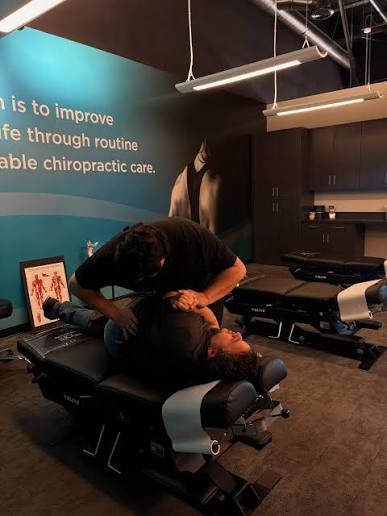
Pelvic and Sacroiliac Adjustments
When the sacroiliac joint is restricted or inflamed, a targeted adjustment can restore movement and take the mechanical stress off the surrounding tissue. People often describe an immediate sense of release in the area after a sacroiliac adjustment. The hip and buttock pain that has been nagging for weeks can shift significantly after the first few sessions.
Lumbar Spine Adjustments
When the lower spine is contributing to hip pain through referred pain or nerve irritation, adjustments to the lumbar region address the source rather than the symptom. Our chiropractor will determine whether this is part of the picture during the initial exam.
Soft Tissue Work Around the Hip
Chronically tight hip flexors, a stiff piriformis, or an overloaded iliotibial band all contribute to hip pain and pelvic imbalance. Soft tissue techniques can release that tension alongside the adjustment, which helps the joint correction hold better between visits.
Movement and Muscle Guidance
Our chiropractor will often give you specific stretches or movements to do between visits. For hip and pelvic problems, this usually involves loosening the hip flexors, activating the glutes, and building a bit more awareness around how you sit and move throughout the day.
How to Prevent Hip Pain from Getting Worse
Stretch the Hip Flexors Daily
A simple half-kneeling hip flexor stretch held for thirty to sixty seconds on each side can make a real difference if anterior pelvic tilt is part of your pattern. Kneel on one knee with the other foot forward, tuck your tailbone slightly, and shift your weight forward until you feel a stretch at the front of the hip on the kneeling side. Do this every morning and again after any long period of sitting.
Activate the Glutes
Weak glutes are almost always part of the picture in pelvic alignment problems. Glute bridges are a simple place to start. Lie on your back with your knees bent and feet flat. Squeeze your glutes and lift your hips off the floor until your body forms a straight line from knees to shoulders. Hold for two seconds and lower slowly. Ten to fifteen repetitions a day give the pelvis stabilizers something to work with.
Take Movement Breaks if You Sit a Lot
Sitting for hours without moving keeps the hip flexors short and the pelvis tilted. Getting up for two to three minutes every hour, even just to walk to another room and back, interrupts that pattern before it has time to tighten up.
Can Your Sleeping Position Make Hip Pain Worse?
If you sleep on your side with your knees pulled up, that position can compress the sacroiliac joint on the side you are lying on over the course of a night. Putting a pillow between your knees keeps the pelvis more neutral and takes that pressure off. If you sleep on your back, a pillow under the knees can reduce the arch in the lower back and make sleeping with hip pain more tolerable.
Ice for Flare-Ups, Heat for Chronic Stiffness
When the hip or sacroiliac area flares up and feels hot or acutely painful, fifteen to twenty minutes of ice can help calm the inflammation. When the area feels tight and stiff rather than acutely painful, heat is usually more effective at loosening things up. When in doubt, ask our chiropractor which one fits your situation.
Where to Find a Chiropractor for Hip and Pelvic Care in the Southeast Valley
Hip pain that has been going on for weeks or months without a clear explanation often comes from the pelvis, the sacroiliac joints, or the lower spine. All of those are areas that our chiropractor evaluates routinely.
When you come in, our chiropractors will sit down with you to talk about your symptoms and find out what makes your pain better or worse. Then, we will do a focused exam of your lower back and hips to find exactly where the nerve is getting irritated. If we find that chiropractic care is the right solution for you, you can get your very first adjustment during that exact same visit.
Getting started is simple with our $29 new patient special, which covers your initial consultation, a full spinal exam, and your first adjustment.
Walk into your nearest Southeast Valley clinic today: Power Ranch, Mesa Gateway, San Tan Village, Queen Creek, and San Tan Valley.
If you want to know what the full first visit looks like from intake to adjustment, our guide on what to expect at your first chiropractic visit covers everything step by step.
Your content goes here. Edit or remove this text inline or in the module Content settings. You can also style every aspect of this content in the module Design settings and even apply custom CSS to this text in the module Advanced settings.
Frequently Asked Questions About Hip Pain and Chiropractic Care
Can a chiropractor help with hip pain?
Yes, when the hip pain has a mechanical cause. Sacroiliac joint problems, pelvic misalignment, lumbar spine issues that refer pain into the hip, and tight hip muscles all respond well to chiropractic care. The first visit evaluation identifies which of these is driving the problem and whether chiropractic is the right fit for your situation.
What is pelvic misalignment, and how does it affect the hips?
Pelvic misalignment happens when the pelvis tilts or shifts out of its neutral position. That changes how the hip joints are loaded and can put uneven stress on the surrounding muscles, tendons, and the sacroiliac joints. Over time, that uneven loading leads to pain, stiffness, and reduced range of motion in the hip.
What is the sacroiliac joint, and why does it matter for hip pain?
The sacroiliac joint connects the base of your spine to the back of your pelvis. When it gets restricted or inflamed, it can refer pain into the lower back, buttock, hip, groin, and upper leg. A lot of patients come in thinking they have a hip problem when the sacroiliac joint is actually the main issue.
How many chiropractic visits does it take to see improvement?
For sacroiliac joint pain and pelvic alignment problems, many people notice a change within three to five visits. Longer-standing issues may take more time. Our chiropractor will give you a realistic estimate after the initial exam.
Is it normal for hip pain to also feel like lower back or groin pain?
Yes. The hip, pelvis, sacroiliac joints, and lumbar spine are all closely connected. Pain from any one of these structures can refer to the others. It is common to feel hip pain that also shows up in the buttock, groin, or lower back, and it does not always mean all of those areas have separate problems.
Can chiropractic help with hip pain during or after pregnancy?
Yes. Pelvic instability and sacroiliac joint pain are common during and after pregnancy. Chiropractic care can help restore balance to the pelvis and relieve pain in the hip, lower back, and buttocks during pregnancy and in the postpartum period. Our chiropractor will adapt the approach to your situation.
Should I rest when my hip is hurting?
A day or two of reduced activity during a severe flare is reasonable. Beyond that, staying too still usually makes hip and pelvic pain worse. Gentle walking and light movement keep the joints from stiffening up. Our chiropractor can tell you what to avoid based on what they find in the exam.
Do I need an appointment at The Joint Chiropractic in the Southeast Valley?
No. All five Southeast Valley locations, including Power Ranch, Mesa Gateway, Gilbert, Queen Creek, and San Tan Valley, offer walk-in care. Same-day visits are available, and no insurance is needed.
Get Relief From Posture-Driven Hip Pain
If having hip pain has been keeping you from focusing on your work, enjoying your family time, or simply getting through your day comfortably, it is time to find out why. Waiting for the stiffness and pain to pass on its own often means more time spent suffering while the structural strain deepens, whereas getting a prompt evaluation can significantly shorten your recovery time.
At The Joint Chiropractic, a licensed Doctor of Chiropractic will look closely at your spine and explain whether chiropractic care is the right fit for your hip and pelvic pain. Getting your pelvis and sacroiliac joints to move properly again takes pressure off irritated muscles and nerves, which allows the stiffness and deep aches to lessen and fade away.
If you are ready to find relief from posture-driven hip pain and get back to living your life comfortably, our team is here to help you take that first step. Walk-ins are always welcome at our five Southeast Valley locations, with no appointment or insurance required. Visit our clinics today, or find the location closest to you to claim your $29 new patient consultation, exam, and initial adjustment.
Disclaimer
This article is for general informational purposes only and does not provide medical or chiropractic diagnosis or treatment recommendations for any individual person. Always consult a qualified healthcare professional for an examination, diagnosis, and personalized treatment plan.
References
Chou, L. H., Slipman, C. W., Bhad, A., et al. (2005). A randomized clinical trial of manual versus mechanical force manipulation in the treatment of sacroiliac joint syndrome. Journal of Manipulative and Physiological Therapeutics. https://pubmed.ncbi.nlm.nih.gov/16182023/