
Quick Highlights
A strong core helps support and stabilize your spine during everyday movements like bending, lifting, twisting, and even getting out of a chair. When those muscles aren’t doing their share of the work, your lower back can take on more stress.
In this guide, you’ll learn:
-
- How a weak core can contribute to lower back pain.
- Which core exercises can help strengthen and support your lower back.
- How often core exercises are generally recommended for back pain.
- Common core exercise mistakes that can put more stress on your back.
- When back pain needs more than exercise alone.
- Where to find walk-in chiropractic care for back pain in the Southeast Valley.
Table of Contents
- Can a Weak Core Cause Back Pain?
- Core Exercises to Help Reduce Lower Back Pain
- Core Exercise Mistakes That Put More Stress on Your Lower Back
- When Core Exercises Aren’t Enough for Back Pain
- What Southeast Valley Patients Say About Back Pain and Chiropractic Care
- Frequently Asked Questions About Core Strength and Back Pain
Can a Weak Core Cause Back Pain?
“I don’t even lift anything heavy, so why does my back keep acting up? “That’s a question we hear often, and the answer usually comes down to core strength, not the size of whatever you’re lifting.
Your core is made up of more than just the abdominal muscles that you can see. It includes the deep muscles that attach to your entire spine and pelvis. Your core is responsible for keeping your trunk stable every time you bend, twist, or reach. When those muscles are weak or fire out of sync, your lower back ends up absorbing forces it was never designed to manage on its own.
Over time, that extra load shows up as stiffness, recurring strain, or a back that easily tweaks during ordinary movements, such as getting out of a car or picking up a grocery bag.
Core Exercises to Help Reduce Lower Back Pain
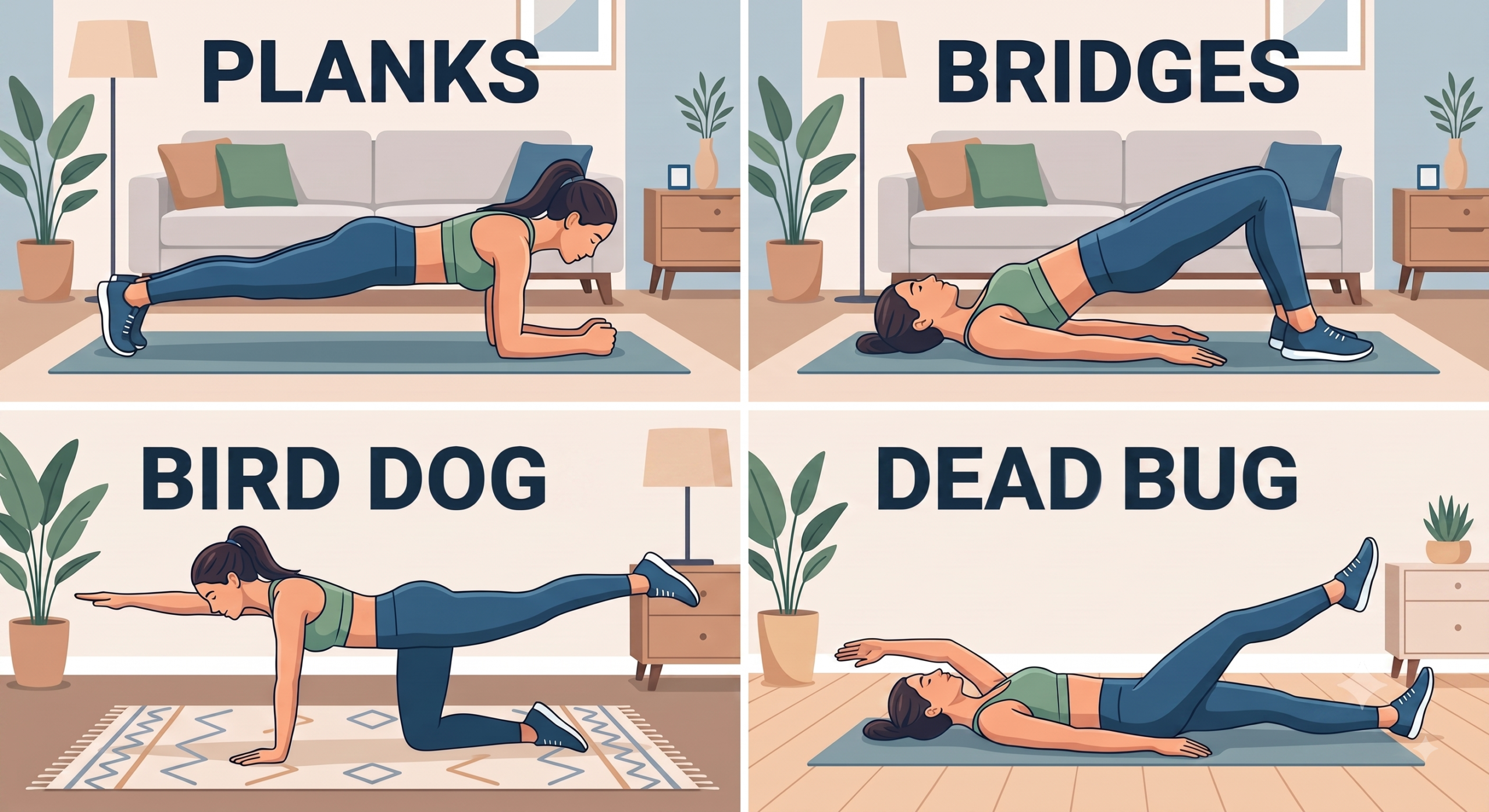
You don’t need a gym or special equipment to strengthen your core. You can do these exercises at home and focus on controlled movements that help improve stability around your spine and pelvis.
Planks for Core Stability
Hold a straight line from shoulders to heels, resting on your forearms and toes. Keep your hips level rather than letting them sag toward the floor or rise too high. Start with short holds and gradually increase the time as you get stronger.
Bridges for Glute and Lower Back Support
Lying on your back with knees bent, lift your hips until your body forms a straight line from shoulders to knees. Squeeze your glutes at the top before lowering back down slowly.
Bird Dog for Core Stability and Balance
From a hands-and-knees position, extend one arm and the opposite leg at the same time, keeping your back flat and hips level. Lower slowly and switch sides.
Dead Bug for Deep Core Strength
Lying on your back with arms reaching toward the ceiling and knees bent at 90 degrees, slowly lower one arm and the opposite leg toward the floor while keeping your lower back pressed down. Return and switch sides.
Two to three sessions a week, done with control rather than speed, is enough to build meaningful strength over a few weeks. Research on core strengthening for chronic low back pain found measurable improvements in pain, endurance, and functional disability, with results exceeding what’s considered a clinically meaningful change.
Core Exercise Mistakes That Put More Stress on Your Lower Back
- Holding your breath throughout a rep: Bracing and holding your breath spikes intra-abdominal pressure in all the wrong places and starves your muscles of oxygen. Practice breathing steadily by inhaling on the setup and exhaling through the hardest part of the movement.
- Rushing through repetitions to hit a count: Flying through reps to get through it trades away the time-under-tension that actually builds functional stability. Slower, deliberate reps with controlled lowering phases force your deep stabilizing muscles to do the real work instead of relying on momentum.
- Ignoring the glutes and hips: Many people assume the core is just the visible six-pack abdominal wall. In reality, a strong core acts as a 360-degree belt supporting the spine and pelvis, which means glute and hip engagement through moves like bridges is mandatory for true lower back protection.
- Arching or sagging the lower back: Letting your lumbar spine collapse during planks or bird dogs places direct stress on your spinal facet joints. Focus on maintaining a neutral pelvis by gently tucking your tailbone and pulling your belly button toward your spine.
- Prioritizing intensity over proper form: Adding complex variations or long holds before mastering basic alignment leads to muscle compensation. If your form breaks down halfway through a set, stop because sloppy reps only train your body to move inefficiently.
When Core Exercises Aren’t Enough for Back Pain
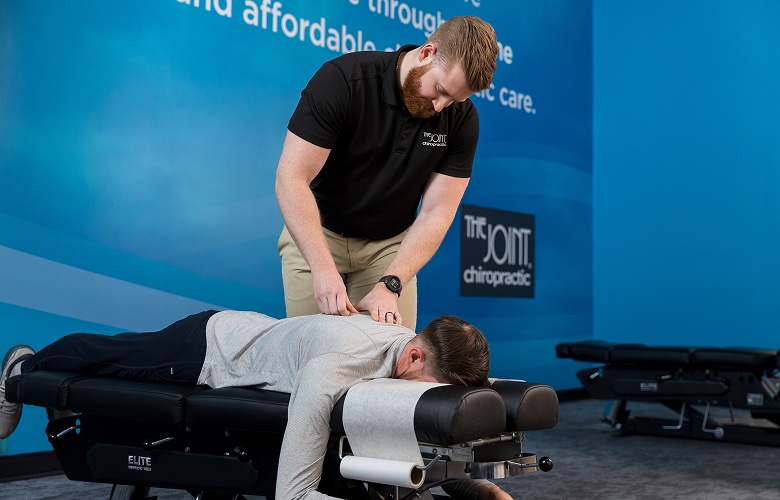
If your back pain isn’t improving with exercise or is making everyday movement difficult, it may be time to have it evaluated. At our Southeast Valley clinics, a licensed Doctor of Chiropractic will review your health history, perform a spinal examination, explain the findings, and determine whether chiropractic care is appropriate for your symptoms.
The $29 new patient visit covers your consultation, spinal exam, and first adjustment. You can review your options ahead of time on the pricing page.
Walk into your nearest Southeast Valley clinic today: Power Ranch, Mesa Gateway, San Tan Village, Queen Creek, If you’d like to know what a first visit involves from start to finish, take a look at our guide on what to expect at your first chiropractic visit.
What Southeast Valley Patients Say About Back Pain and Chiropractic Care
Exercise is an important part of keeping your back strong, but some patients need additional care when pain or restricted movement persists. Here’s what a few patients have shared about their experience at our Southeast Valley clinics.
“I’ve been dealing with lower back pain for a few years… My back is feeling much better over the last few weeks.” – J. Brown
“After a few treatments… my back is moving so much easier.” — J. Gottfredson
“If I keep up with my weekly visits, my back feels fantastic.” Fredrick
See what more patients near you say: Power Ranch, Mesa Gateway, Queen Creek, San Tan Village, and San Tan Valley.
Frequently Asked Questions About Core Strength and Back Pain
How does core strength affect back pain?
A weak or poorly coordinated core forces your lower back to compensate for the stability it should be getting elsewhere. Building core strength takes pressure off the spine during everyday movement.
How often should I do core exercises?
Two to three sessions a week, done with good form, build meaningful strength over several weeks. Consistency matters more than intensity.
Can core exercises fix chronic back pain on their own?
Core exercises help, but if your joints are out of alignment, working out around a structural issue won’t fix the underlying problem. But pain that’s sharp, radiating, or not improving with exercise should be evaluated rather than pushed through.
Do I need an appointment at The Joint Chiropractic in the Southeast Valley?
No. All five Southeast Valley locations, including Power Ranch, Mesa Gateway, San Tan Village, Queen Creek, and San Tan Valley, offer walk-in chiropractic care with no appointment and no insurance needed.
A Weak Core Doesn’t Have to Be Your Normal
If your back tends to act up during ordinary moments, like getting out of a chair, reaching for something, or standing too long, a stronger core is often the missing piece. Building that strength takes a few consistent weeks, not a single workout, but the payoff is a back that holds up to daily life instead of working against you.
Real back resilience requires two things working together: joint mobility and muscle strength.
At The Joint Chiropractic, we clear out the joint restriction and pressure first, giving your core the solid foundation it needs to actually support you.
Give your back the foundation it deserves.
Visit one of our 5 Southeast Valley locations whenever it fits your schedule. Walk-ins are always welcome.
Don’t wait another day in discomfort. Find your nearest clinic and claim your $29 New Patient Exam, Consultation, and Initial Adjustment now.
Disclaimer
This article is for general informational purposes only and does not provide medical or chiropractic diagnosis or treatment recommendations for any individual person. Always consult a qualified healthcare professional for an examination, diagnosis, and personalized treatment plan.
References
Alqhtani, R. S., Ahmed, H., Ghulam, H. S. H., Alyami, A. M., Al Sharyah, Y. H. H., Ahmed, R., Khan, A., & Khan, A. R. (2024). Efficacy of core-strengthening and intensive dynamic back exercises on pain, core muscle endurance, and functional disability in patients with chronic non-specific low back pain: A randomized comparative study. Journal of Clinical Medicine, 13(2), 475. https://www.ncbi.nlm.nih.gov/pmc/articles/PMC10816614/
Baerga-Varela, L., & Abréu Ramos, A. M. (2006). Core strengthening exercises for low back pain. Boletín de la Asociación Médica de Puerto Rico, 98(1), 56-61. https://pubmed.ncbi.nlm.nih.gov/19610550/