
Quick Highlights
- What happens during your first chiropractic visit? Most first visits include a health history, spinal exam, and your first chiropractic adjustment during the same appointment.
- Does a chiropractic adjustment hurt? Most patients describe it as a feeling of relief or pressure releasing rather than pain. Mild soreness afterward is common and usually fades within a day or two.
- How should you prepare? Wear comfortable clothing, arrive a few minutes early, and bring any relevant X-rays or medical records if you have them.
- Do you need an appointment? No. The Joint Chiropractic offers walk-in care at five Southeast Valley locations with no insurance required.
- How much does the first visit cost? Your $29 new patient visit includes your consultation, spinal exam, and first adjustment.
Table of Contents
- What to Expect During Your First Chiropractic Visit
- How to Prepare Before You Arrive
- What Happens When You Walk In?
- Your Health History and Spinal Exam
- What Your First Chiropractic Adjustment Feels Like
- What Happens After Your First Adjustment?
- Red Flag Symptoms: When Chiropractic Is Not the First Step
- What to Expect at The Joint Chiropractic
- What First-Time Patients Say
- Frequently Asked Questions
What Happens During Your First Chiropractic Visit?
If you have been putting off chiropractic care because you were not sure what actually happens when you walk through the door, you are not alone. A lot of people picture something more dramatic than it is: cracking sounds, awkward positions, or a pushy pitch for a six-month treatment plan.
The reality is much simpler than that. A first chiropractic visit is mostly a conversation and an exam, followed by an adjustment if everything checks out. It gives your chiropractor a clear picture of what is going on in your body before any treatment begins.
At the Joint Chiropractic, we approach patient care similarly to conventional medicine. We interview the patient, take a health history, perform an exam, and develop a plan before beginning treatment. That structure is there to protect you, not just to fill time.
Here is a clear breakdown of what to expect before you get there.
How to Prepare Before You Arrive
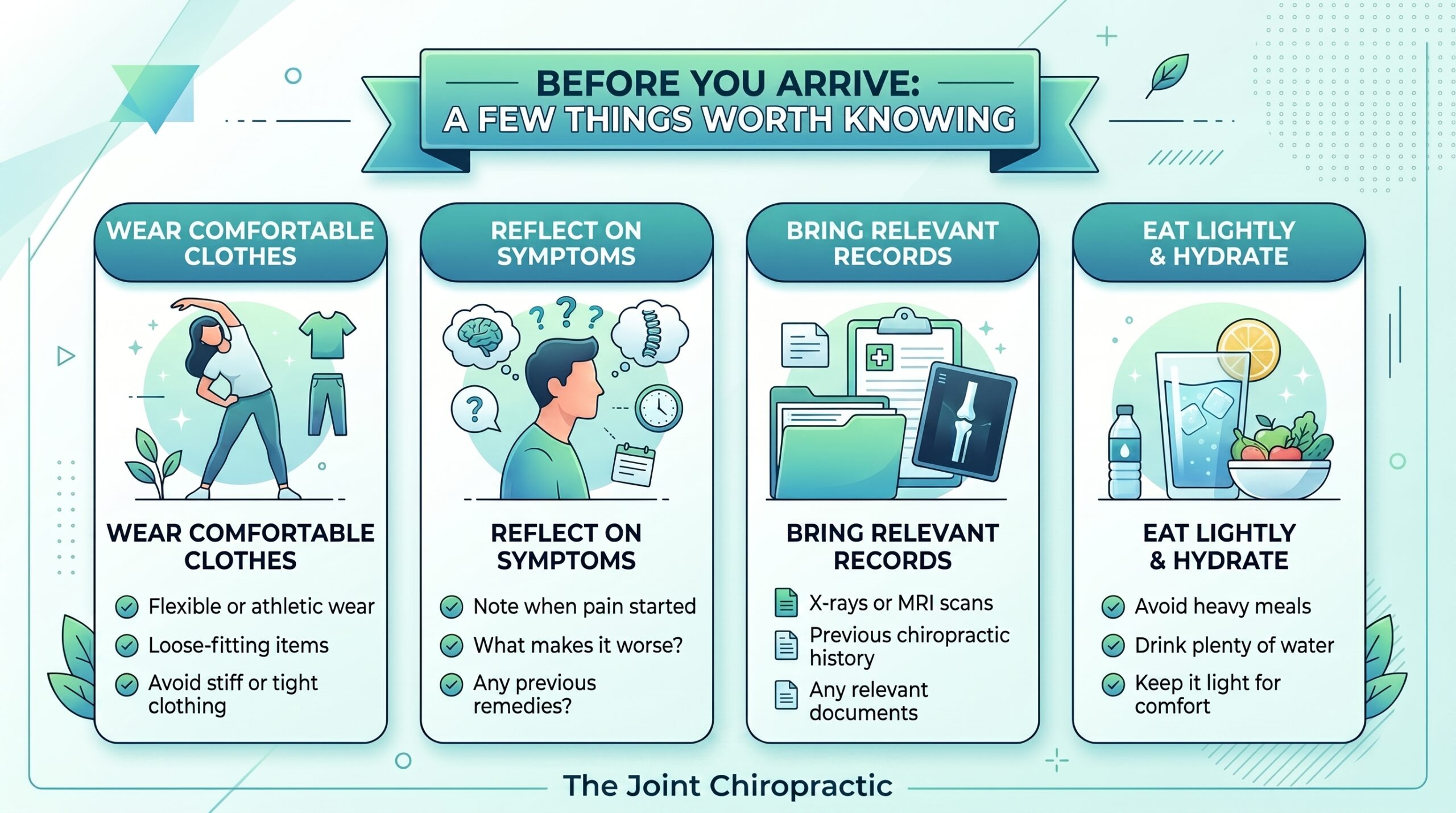
Wear Comfortable, Loose-Fitting Clothing
Your chiropractor will need to observe your posture and movement and, in some cases, examine your spine directly. Athletic wear, jeans that move well, or anything you would wear to a gym works fine. Avoid stiff dress clothes or anything that restricts how you move.
Think About Your Symptoms Ahead of Time
You will be asked when the pain started, what makes it worse, and what you have already tried. Running through this in your head beforehand, or even jotting a few notes, makes the intake go faster and gives your chiropractor a clearer picture from the start.
Bring Any Relevant Imaging or Records
If you have had X-rays, an MRI, or previous chiropractic records related to the area you are concerned about, bring those reports along. Your chiropractor may not need them, but having them available helps avoid unnecessary repeat imaging and gives more context for your exam.
Eat Light and Drink Water
A heavy meal right before your visit can make certain positions uncomfortable, especially if your chiropractor needs to work on your lower back or mid-spine. A light snack and some water beforehand is all you need.
When You Walk In: The Intake Process
At The Joint Chiropractic, there is no complicated check-in and no long wait. Walk-in care means you do not need an appointment. You may come in when it works for you.
New patients fill out brief health history forms. It covers your current symptoms, any past injuries or surgeries, medications you take, and any health conditions your chiropractor should know about before working on your spine.
People underestimate how vital this step is. Certain conditions, like severe osteoporosis, recent fractures, or specific circulatory issues, can change how an adjustment is performed or which techniques are used. Being upfront during intake is one of the most useful things you can do for your own care.
How Long Does the First Visit Take?
Most new patient visits at The Joint run about 20 to 40 minutes, depending on your situation. That covers the intake, the spinal exam, and your first adjustment. Follow-up visits are much shorter. Most patients are in and out in under ten minutes, which makes it a lot easier to stay consistent with care over time.
The Spinal Exam: What Your Chiropractor Is Looking For
After intake, your chiropractor will do a physical exam focused on how your spine and joints are moving. This is not a full medical workup. It is focused on what brought you in.
Depending on your symptoms, the exam may include the following:
- Posture analysis, looking at how your head, shoulders, hips, and feet line up when you are standing
- Range-of-motion testing to see how far you can comfortably turn, bend, or flex
- Orthopedic tests, which are simple movements or positions that help pinpoint which joints or muscles are involved
- Palpation, where your chiropractor uses their hands to feel for restricted or tender areas along the spine
This exam tells your chiropractor where the problem is coming from, how significant it is, and what kind of adjustment makes sense for your first visit. It is also the point where your chiropractor will flag anything that may need a referral to a different provider.
Will They Order X-Rays?
Not always, and not as a routine step. At The Joint Chiropractic, what the exam finds typically guides care. Imaging comes into play when there is a specific reason to suspect something that the physical exam alone cannot answer. Most patients coming in for back pain, neck tension, or headaches do not need X-rays on a first visit. If there has been a recent trauma or unexplained chronic condition, then it is likely that your chiropractor will order imaging. That is also a simple process.
Your First Chiropractic Adjustment: What It Actually Feels Like
This is usually the part first-timers are most curious about, and sometimes a little nervous about. Here is what typically happens.
Your chiropractor will position you on the adjustment table, usually face down, on your side, or seated, depending on which part of the spine they are working on. They will use their hands to apply a controlled, quick force to a specific joint that is restricted or not moving the way it should.
What Is That Popping Sound?
The pop you hear is gas releasing from the synovial fluid inside the joint. It is the same thing that happens when you crack your knuckles, but done with clinical training and a specific purpose. It does not mean anything broke. It does not confirm whether the adjustment worked or not. It is what happens when a joint moves quickly through its full range of motion.
Some adjustments produce that sound. Some do not. Either way is completely normal. The sound does not matter. What matters is that the doctor can get your joint moving normally again so that you can feel better and move better.
Does It Hurt?
Most patients describe it as a release. A sense of pressure, letting go of what they did not fully realize they were holding onto. Some people feel a brief moment of discomfort, especially in areas that have been tense or restricted for a long time. But sharp pain or pain that lingers during an adjustment is not normal. If that happens, say something right away.
If the chiropractor recommends manipulation as a viable treatment for you, then you are in the right place! Research from the NCCIH found that manual spinal manipulation produces greater short-term reductions in pain and disability for people with acute or subacute low back pain compared to standard medical care. For most people coming in with back pain, neck stiffness, or tension headaches, the adjustment ends up being the part they look forward to on future visits.
What If They Do Not Adjust Me on the First Visit?
It does not happen often, but it does happen. If your chiropractor finds something during the exam that makes an adjustment inadvisable, whether that is a severe acute injury, a red flag that needs imaging, or a condition outside the scope of chiropractic care, they will explain why and point you in the right direction. A good chiropractor does not adjust everyone who walks in. That is clinical judgment, not a problem.
After Your First Visit: What to Expect in the Next 24 to 48 Hours
Once the adjustment is done, your chiropractor will typically walk you through what they found, how things looked, and what they suggest going forward. If you came in with active pain, they may recommend coming back a few times over the next couple of weeks. If you came in for maintenance or general wellness, the schedule will likely be more spread out.
Will I Be Sore?
Mild soreness in the adjusted area is common after a first visit, especially when joints and muscles have not been moved through their full range in a while. It tends to feel like the day after a new workout. Not sharp, not alarming, just a bit achy.
That soreness usually passes within 24 to 48 hours. Staying hydrated, skipping intense exercise on the day of your visit, and applying ice or heat to the area can all help. If the discomfort feels significant or does not improve, reach out to the clinic.
What Should I Avoid Afterward?
- Heavy lifting or hard physical activity on the same day
- Staying seated in one position for long stretches without getting up to move
- Brushing off new or worsening symptoms. If something feels off, call.
Light movement, short walks, and normal daily activity are all fine. The whole point of the adjustment is to help you move better, not to keep you parked on the couch.
Red Flag Symptoms: When Chiropractic Is Not the First Step
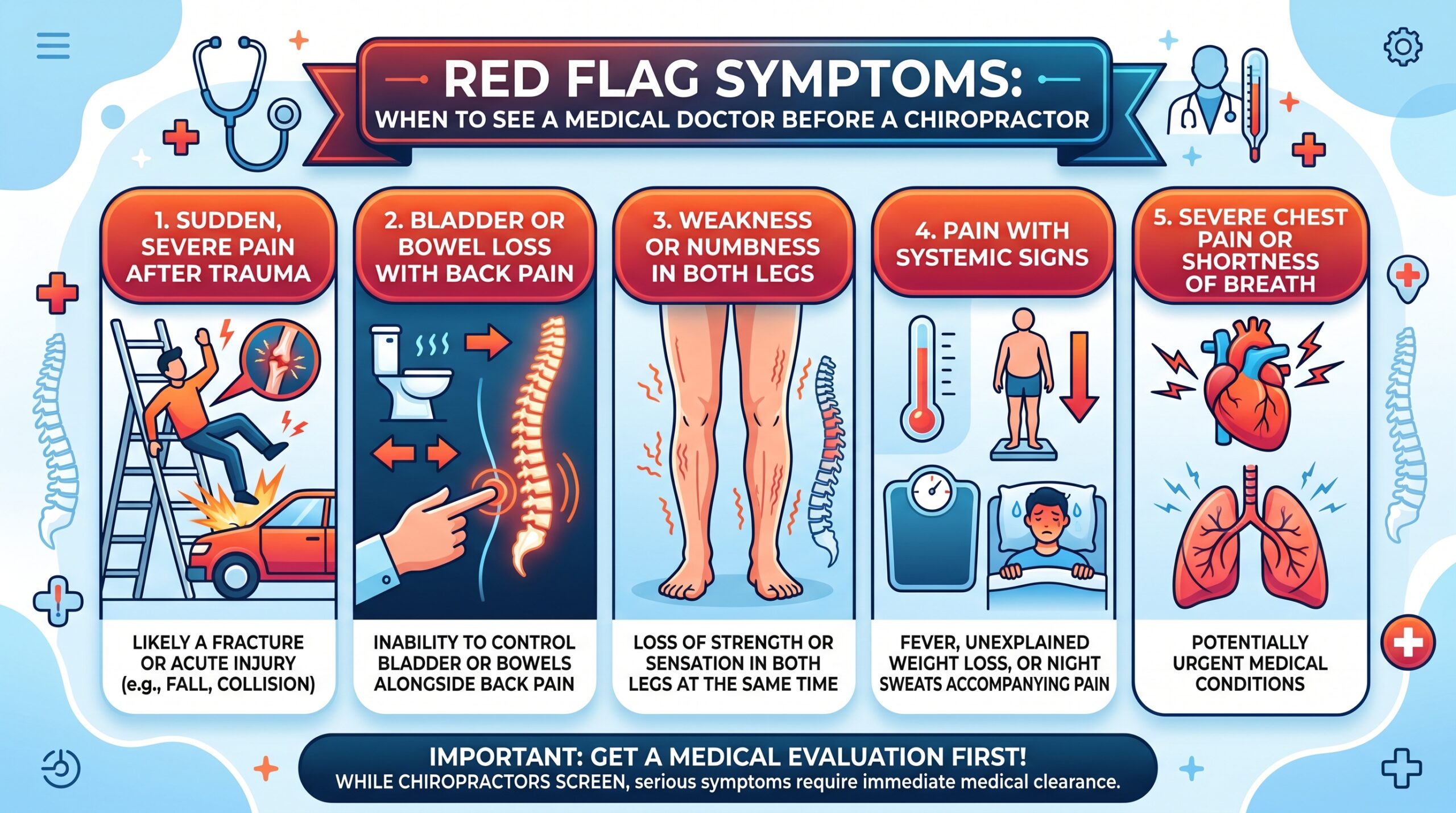
Chiropractic care works well for a wide range of musculoskeletal problems, but it is not the right starting point for everything. If you are dealing with any of the following, see a medical doctor before scheduling a chiropractic visit:
- Sudden, severe pain after a fall, collision, or accident, which could point to a fracture or acute injury
- Loss of bladder or bowel control along with back pain
- Weakness or numbness in both legs at the same time
- Pain that comes with fever, unexplained weight loss, or night sweats
- Severe chest pain or shortness of breath
A licensed chiropractor will screen for these during intake and the exam. But if anything on this list applies to you, do not wait. Get a medical evaluation first.
What to Expect at The Joint Chiropractic in the Southeast Valley
The Joint Chiropractic keeps the process simple. No appointments, no insurance required, and no pressure to sign up for anything before your first visit is done. You can look over your affordable care options on the pricing page before you walk in, so there are no surprises when you get here.
When you arrive, you will meet with a licensed Doctor of Chiropractic who will take your health history, do a spinal exam, and perform your first adjustment during that same visit if everything checks out. Your care is personalized, built around what the exam actually finds, not a preset plan handed to every new patient.
Follow-up visits are fast. Most patients are done in under ten minutes. That is what makes it practical to keep up with regular care, even when your schedule is full.
The $29 new patient visit covers everything: the consultation, the spinal exam, and your first adjustment. After that, you can choose between single visits or a monthly wellness plan. No long-term contracts.
Whether you are near Power Ranch, Mesa Gateway, Gilbert (San Tan Village), Queen Creek, and San Tan Valley, you can find your nearest location and book your visit here Southeast Valley Chiropractic Clinics.
Real First Chiropractic Visit Experiences at The Joint (Individual Results May Vary)
It’s completely normal to feel a little nervous before your first chiropractic visit.
Whether you’re planning to visit our Power Ranch location in Queen Creek or another one of our Southeast Valley clinics, many patients tell us the experience was much easier than they expected. Here are a few of their first impressions:
⭐️⭐️⭐️⭐️⭐️
“First time at The Joint Chiropractic. Staff was friendly and explained my visit in detail. No pressure sale but I do know my back needs gradual work.” — Kristen A.
⭐️⭐️⭐️⭐️⭐️
“Coming in today for my first time I was scared but optimistic. I really enjoyed my visit and how kind everyone was! I love that I can walk in…” — Cassandra
⭐️⭐️⭐️⭐️⭐️
“Dr. Porterfield was very professional. He explained everything he was going to do… He was very gentle…” — Kim L
⭐️⭐️⭐️⭐️⭐️
“First time visiting a chiropractor due to insane neck and shoulder pain. The doctor did great with me as I was nervous and have 0 pain tolerance.” — Kathy
Every patient’s experience is unique, but many of the questions people ask before their first chiropractic visit are surprisingly similar. If you’re still wondering about adjustments, recovery, or what to expect, we’ve answered some of the most common questions below.
Frequently Asked Questions About Your First Chiropractic Visit
What happens at your very first chiropractic visit?
Your first visit covers a health history intake, a physical and spinal exam, a review of findings, and, in most cases, your first adjustment. The point is to understand what is going on in your body before any treatment begins.
Should I be nervous about my first chiropractic adjustment?
No. Most first-time patients walk out surprised by how manageable it was. The adjustment is quick, focused, and usually feels like a release of pressure rather than something painful. The popping sound is just gas leaving the joint. 90% of people leave with some level of relief and very happy with the plan.
How long does a first chiropractic visit take?
At The Joint Chiropractic, new patient visits typically run 25 to 40 minutes. That covers the intake, the spinal exam, your first adjustment, and a quick wrap-up with your chiropractor. Follow-up visits are much shorter, usually ten minutes or less.
Will I be sore after my first chiropractic adjustment?
Some soreness is common, especially if the joints being adjusted have not moved through their full range in a while. It tends to feel like post-workout muscle soreness and clears up within a day or two. Drinking water and avoiding intense activity that day can help.
Do I need an appointment at The Joint Chiropractic in the Southeast Valley?
No. All five Southeast Valley locations, including Power Ranch, Mesa Gateway, San Tan Village in Gilbert, Queen Creek, and San Tan Valley, offer walk-in care. Same-day visits are available, and no insurance is needed.
How much does the first chiropractic visit cost at The Joint?
Your first visit is $29 and includes the full consultation, spinal exam, and initial adjustment. The doctor will give you a treatment plan. You can choose how to pay for those visits: single visits, a package option or a monthly wellness plan. No insurance is required. Full pricing is on the pricing page.
What should I wear to my first chiropractic appointment?
Go with comfortable, loose-fitting clothes. Athletic wear or casual clothes that you can move around in work well. Avoid anything stiff or restrictive that could get in the way of the exam or your adjustment.
Is chiropractic care safe for a first-time patient?
Yes, when performed by a licensed chiropractor who has properly evaluated you first. Serious complications are rare. The most common experience after a first visit is mild, temporary soreness that passes within a couple of days.
Finding Low Back Pain Relief at Our Southeast Valley Clinics
If back pain, neck tension, recurring headaches, or sciatica have been slowing you down, or if you have just been curious about chiropractic and want to see whether it makes sense for you, your first visit is a low-pressure way to find out.
The Joint Chiropractic clinics near Power Ranch in Queen Creek, Gilbert-San Tan Village, Queen Creek, East Mesa and San Tan Valley bring that approach to life with:
- Walk-in visits no appointments needed
- Affordable care without any insurance needed
- Five convenient locations in Southeast Valley communities like Gilbert, Queen Creek, Mesa, and San Tan Valley with additional access to almost 1,000 clinics nationwide
- Evening and weekend hours so care fits your schedule
If you’re tired of wondering how to help your low back pain and ready to try a non-drug, movement-focused approach, we’d love to see you.
Next step:
A first chiropractic visit is a lot more approachable than most people think before they go. The intake covers your history. The exam gives your chiropractor what they need. The adjustment works on what the exam found. And before you leave, you will have a clear sense of what is causing your pain and a personalized plan for how to fix it.
For a lot of Southeast Valley patients dealing with low back pain, neck stiffness, headaches, or sciatica, the first visit is when things finally start to make sense. They get an explanation for what has been going on, and in many cases, they leave with some real relief.
Most people just wish they had come in sooner.
Find the Joint Chiropractic clinic closest to you, and stop by for an evaluation. Let’s get your low back and your life moving in a better direction.
Disclaimer
This article is for general informational purposes only and does not provide medical or chiropractic diagnosis or treatment recommendations for any individual person. Always consult a qualified healthcare professional for an examination, diagnosis, and personalized treatment plan.
References
National Center for Complementary and Integrative Health. (2023). Chiropractic: In depth. U.S. Department of Health & Human Services. https://www.nccih.nih.gov/health/chiropractic-in-depth
National Center for Complementary and Integrative Health. (2014). Manual thrust spinal manipulation may improve short-term treatment outcomes for people with acute or sub-acute low-back pain. U.S. Department of Health & Human Services. https://www.nccih.nih.gov/research/research-results/manual-thrust-spinal-manipulation-may-improve-shortterm-treatment-outcomes-for-people-with-acute-or-subacute-lowback-pain
Lefebvre, R., Peterson, D., & Haas, M. (2012). Evidence-based practice and chiropractic care. Journal of Evidence-Based Complementary & Alternative Medicine, 18(1), 75-79. https://pmc.ncbi.nlm.nih.gov/articles/PMC3716373/